
Calcium, Parathyroid Hormone (PTH) & Vitamin D
This calcium monitoring system runs constantly, thereby maintaining calcium in a very narrow but normal range. Normal parathyroid glands will turn on and off dozens of times per day, in an attempt to keep the calcium level in the normal range so our brain, muscles, and all cells & organs can function properly. Those of us with normal parathyroid function will have calcium levels that are in a very narrow range most of the time (this narrow range is usually much narrower than what is considered to be the range of normal by laboratories for calcium).
There are two chemicals involved in managing calcium levels PTH & Vitamin D. They are made by different parts of the bodyand help each other control calcium levels, and also effect each other. There are multiple organs that are involved as well, the parathyroid glands (calcium sensor), bones (calcium storage), kidneys (calcium filter), intestines (calcium intake or delivery area of body), skin/liver/ kidney that work together to make Vitamin D.
PTH or parathyroid hormone is produced in the parathyroid gland where the calcium sensors exist, and calcium levels are monitored. The main job of PTH is to tell the bones (which are the largest storage of calcium – 98% of calcium in the body) to release calcium in the blood. They tell the kidneys to (1) grab the calcium back from the urine and put into the blood & (2) to activate Vitamin D3.
Equally important is Vitamin D, that goes through several steps from the skin to the liver and finally the kidney, before it is activated. In the kidney the final step happens to activate Vitamin D; this last step happens only if PTH is present. The main job of active Vitamin D or 1,25 (Oh)2 Vitamin D3 is to help the intestines absorb calcium and put it into the blood. Without Vitamin D only minimal amounts of calcium get absorbed. Just like PTH, Vitamin D tells the kidneys to grab the calcium back from the urine and put into the blood. In the bones, Vitamin D forces the cells that make bone (osteoblasts) to mature and work to make more bone. Finally, Vitamin D goes to the parathyroid gland where it, tells the gland to stop producing PTH, and slows the growth of the parathyroid glands.
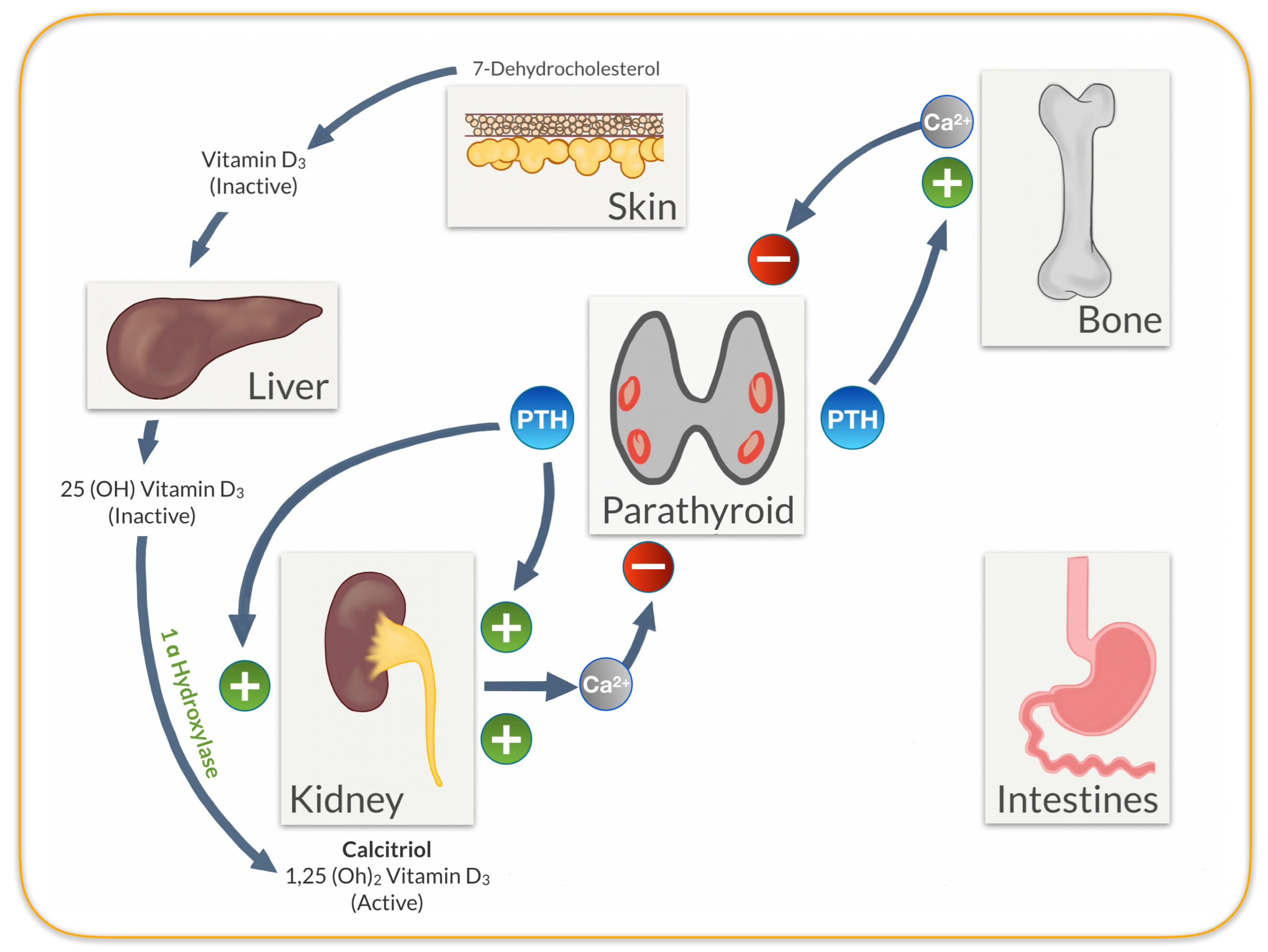
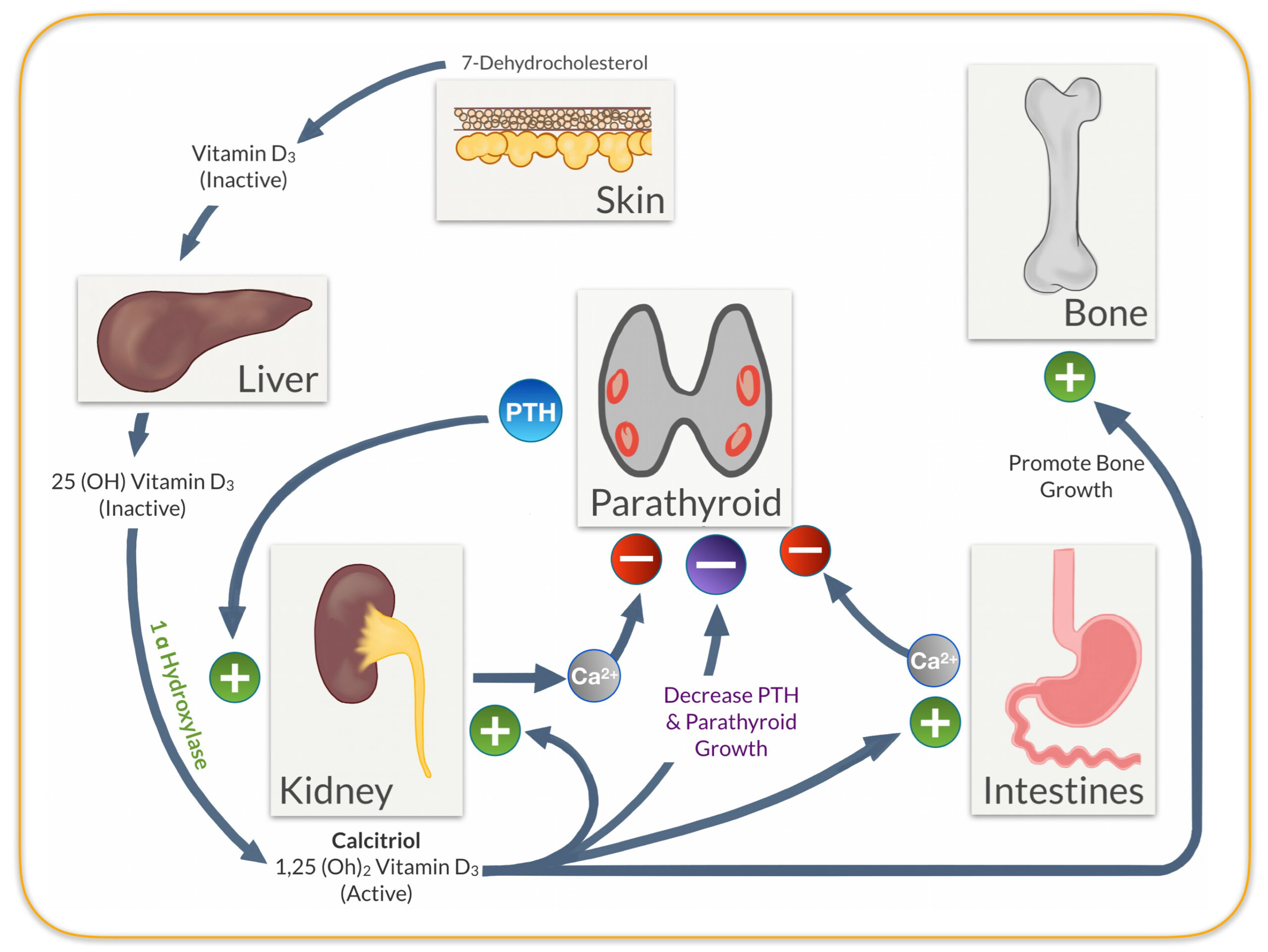
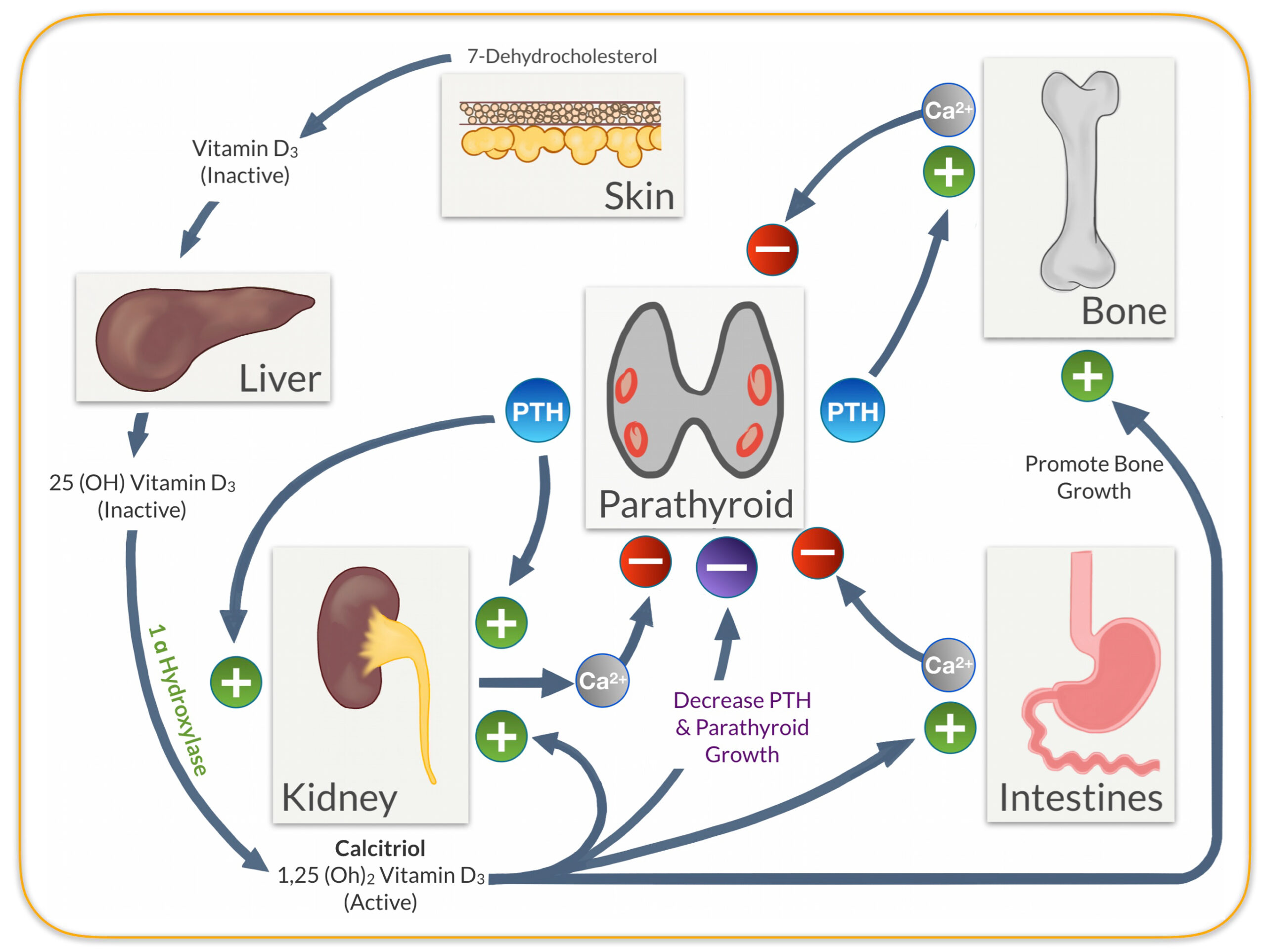
So ultimately, calcium level is controlled by complex interaction between PTH & Vitamin D in a system that tries to have checks and balances on itself. Intentionally in balance and harmony to keep the calcium in a narrow range to allow all organs to function properly.
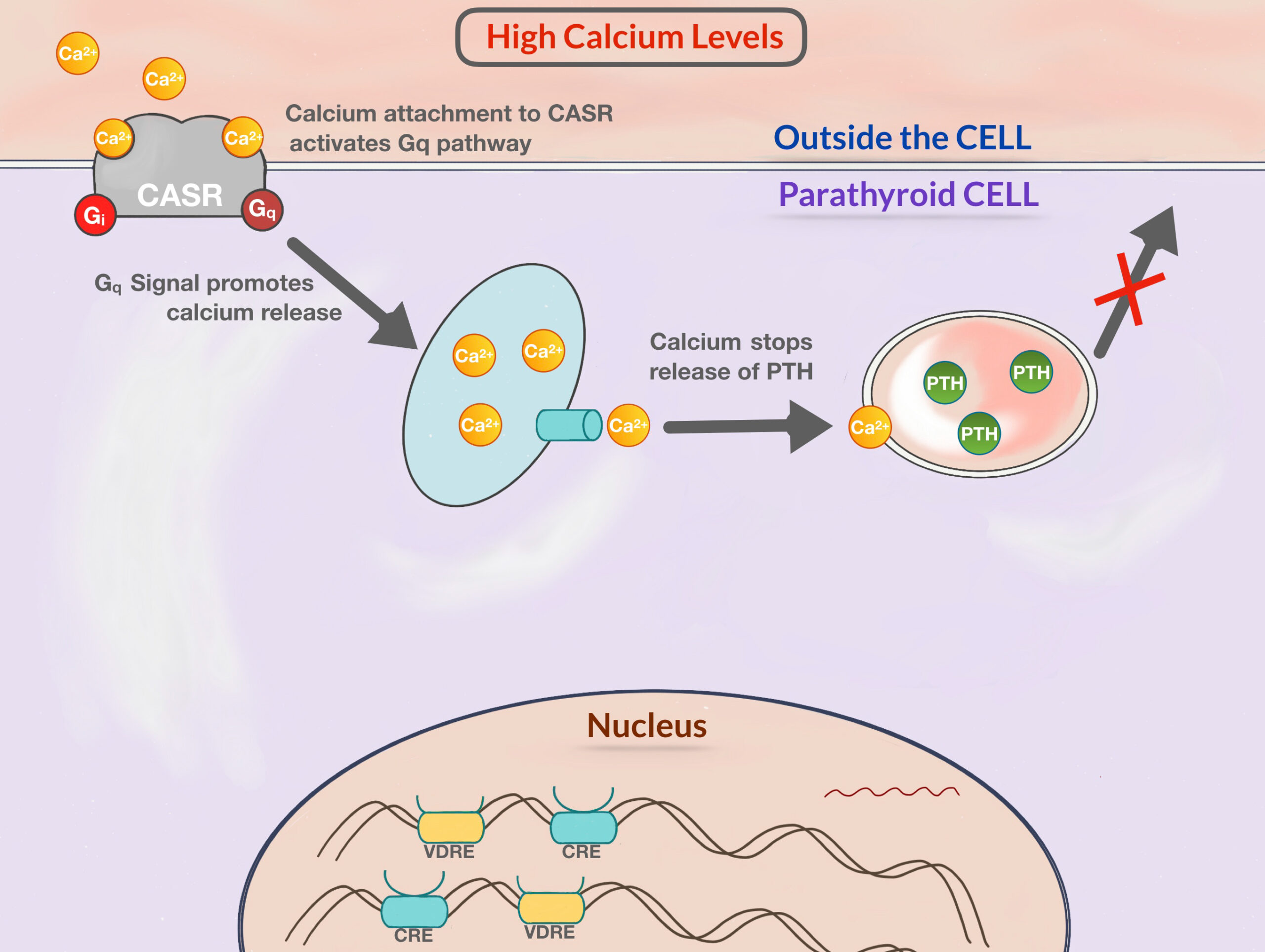
The following figures show how calcium & Vitamin D effect the parathyroid cells on a cellular level.
Figure 1. High calcium levels under normal circumstances cause an increase in calcium concentration inside the parathyroid cell that stabilizes the sacs containing PTH and prevents them from emptying into the blood stream.
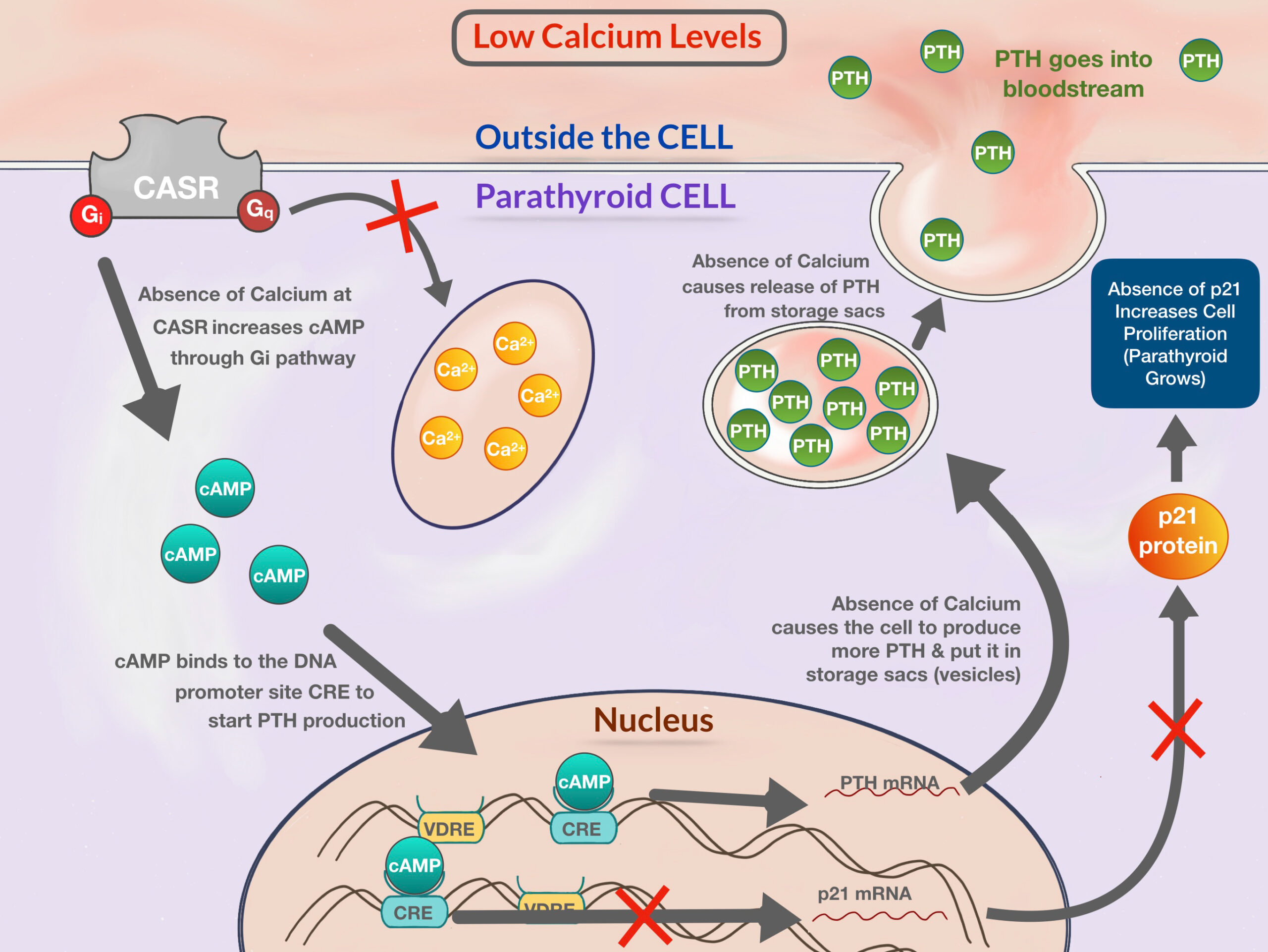
Figure 2. Low calcium levels starts a chain reaction inside the parathyroid cells, through the calcium sensor (CASR) that lead to:
- In the short term, release of calcium from storage sacs into the blood
- Manufacturing of more PTH
- In the long term, growth of parathyroid glands
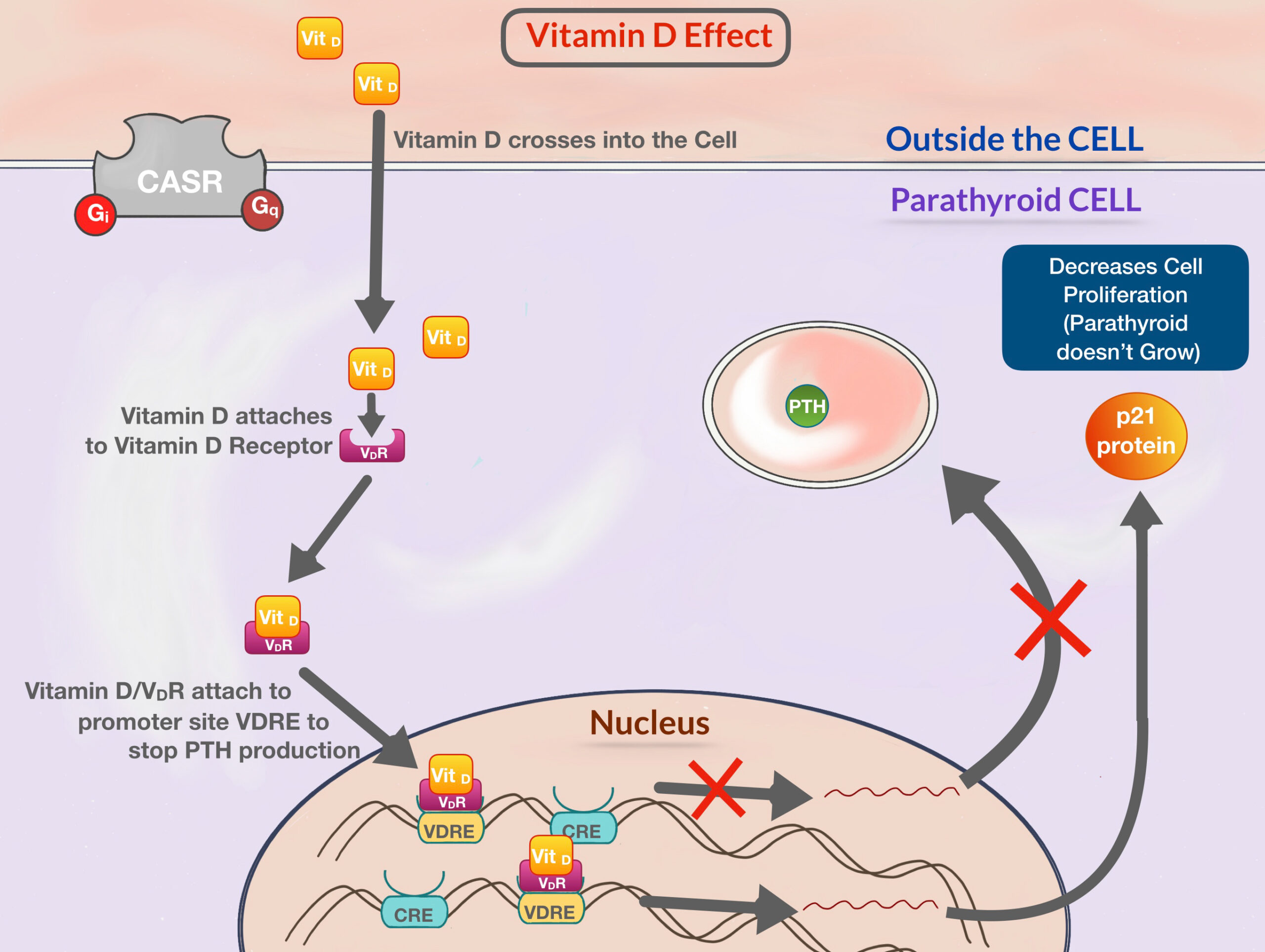
Figure 3. Vitamin D goes directly into the cell and does the following:
- Stops the manufacturing of PTH
- Gets in the way of the growth of parathyroid cells & gland.
Talk To A Parathyroid Expert Today!
If you are suffering from parathyroid disease, contact the CENTER for Advanced Parathyroid Surgery today so we can help you feel like yourself again! Dr. Babak Larian is a parathyroid disease expert who treats patients from around the world. Many of his patients have gone years without being diagnosed properly and upon their first consultation with Dr. Larian are diagnosed with hyperparathyroidism. Dr. Larian will then perform a minimally invasive parathyroidectomy to cure your condition! We are here to help you.