
PARATHYROIDECTOMY – For Treatment of HYPERPLASIA
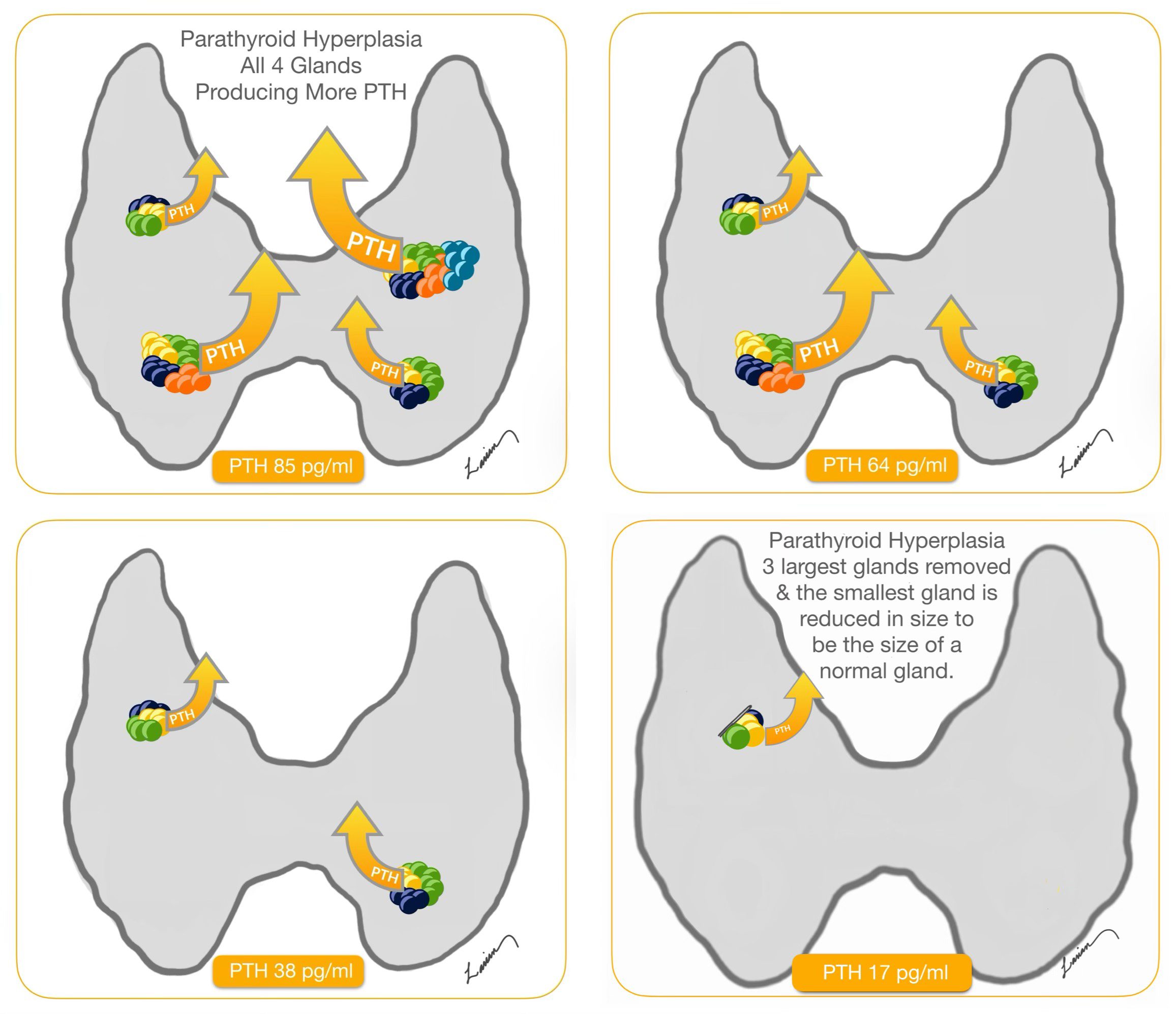
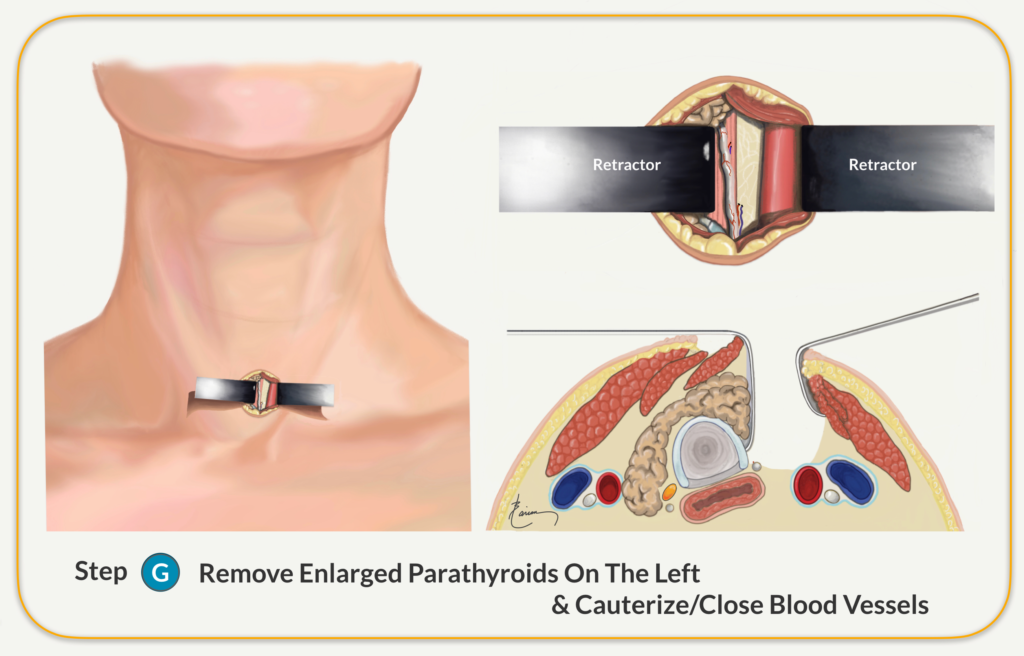
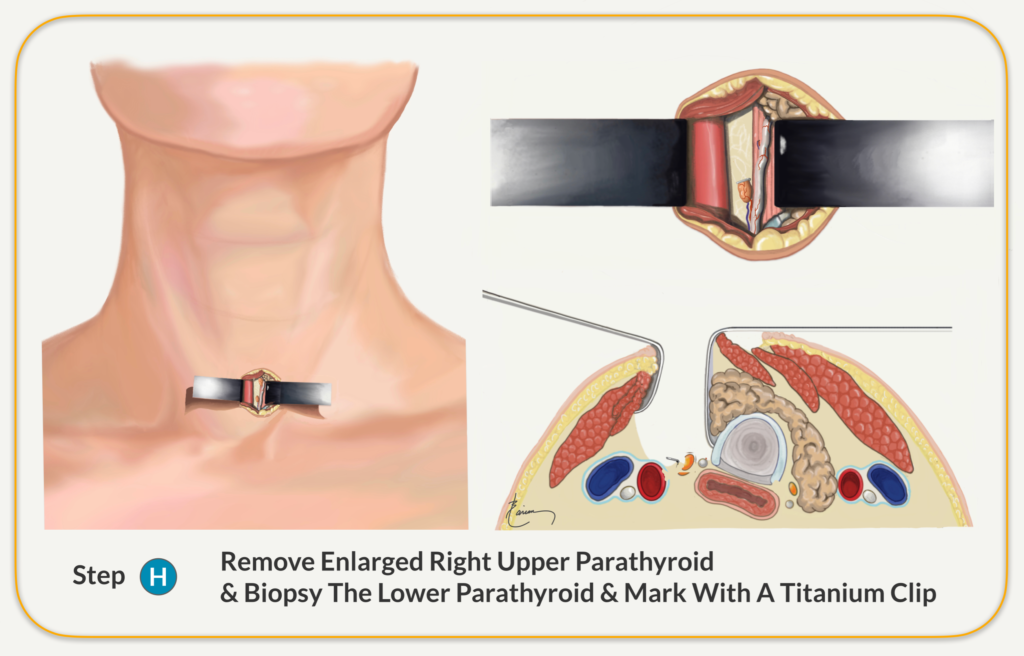
Dr. Babak Larian of the CENTER for Advanced Parathyroid Surgery specializes in Minimally Invasive Parathyroid Surgery to treat hyperparathyroidism. Treatment of parathyroid hyperplasia is more complicated because, hyperplasia means all of the parathyroid cells in all of the parathyroid glands are over-working. This usually results in each gland working (producing PTH) at a different rate and growing at a different pace (Figure 1).
Treatment involves finding all 4 abnormal gland, removing the largest 3 and deciding how to address the 4th & smallest parathyroid gland. If the smallest gland is small (the size of a normal parathyroid gland or smaller then it only should be biopsied if that is deemed not to damage it. If it is larger then reducing it’s size so that it is roughly the size of a normal parathyroid gland while making sure the blood vessels feeding the 4th gland is safe and functioning; this can be confirmed by doing PTH testing at the end of the procedure several times to make sure the last gland is functioning adequately. As a parathyroid surgery expert, Dr. Larian always conducts an advanced 4 gland assessment in order to provide his patients with the highest cure rate & minimize the risk of permanent hypoparathryoidism.
4 Gland Assessment
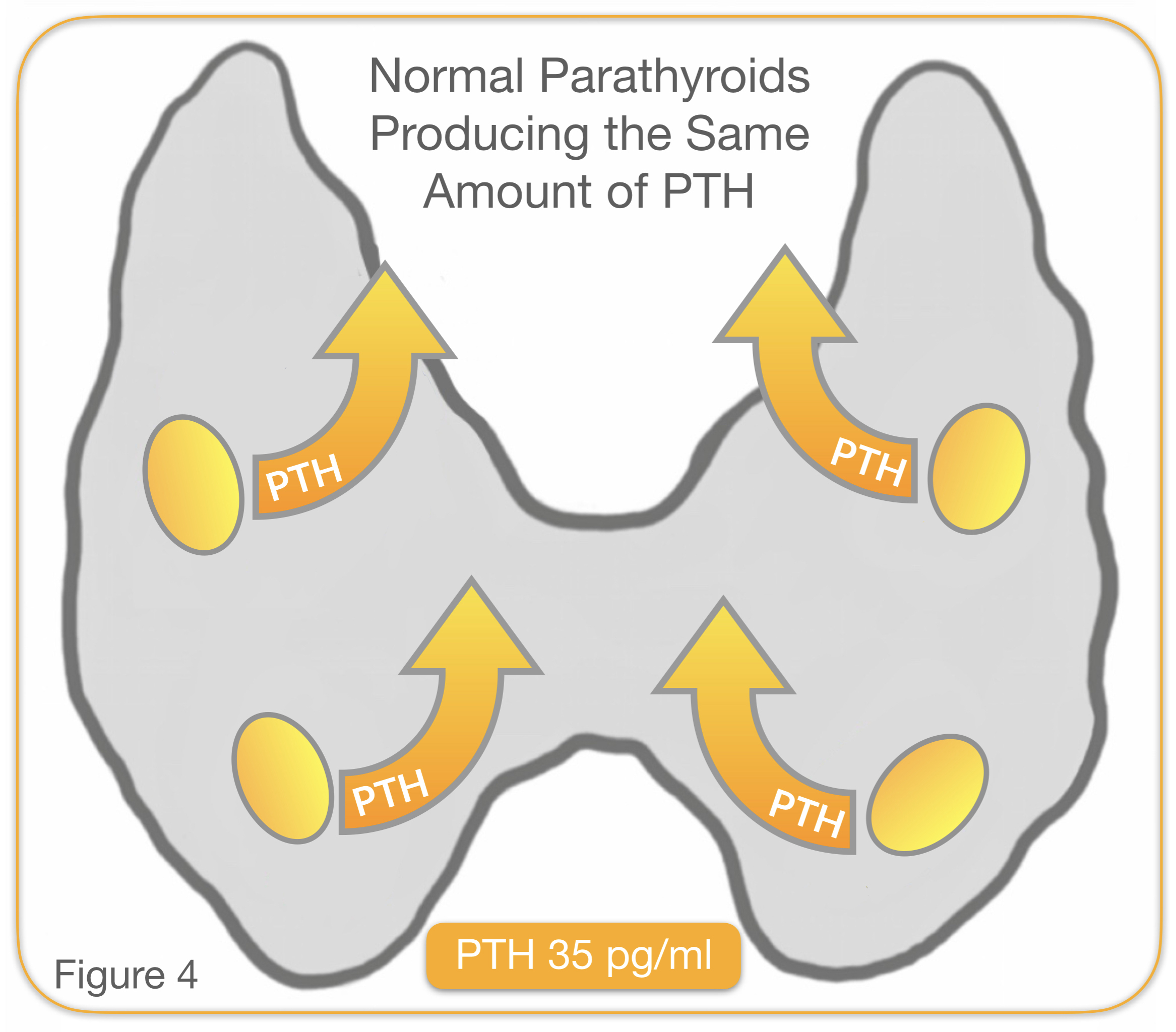
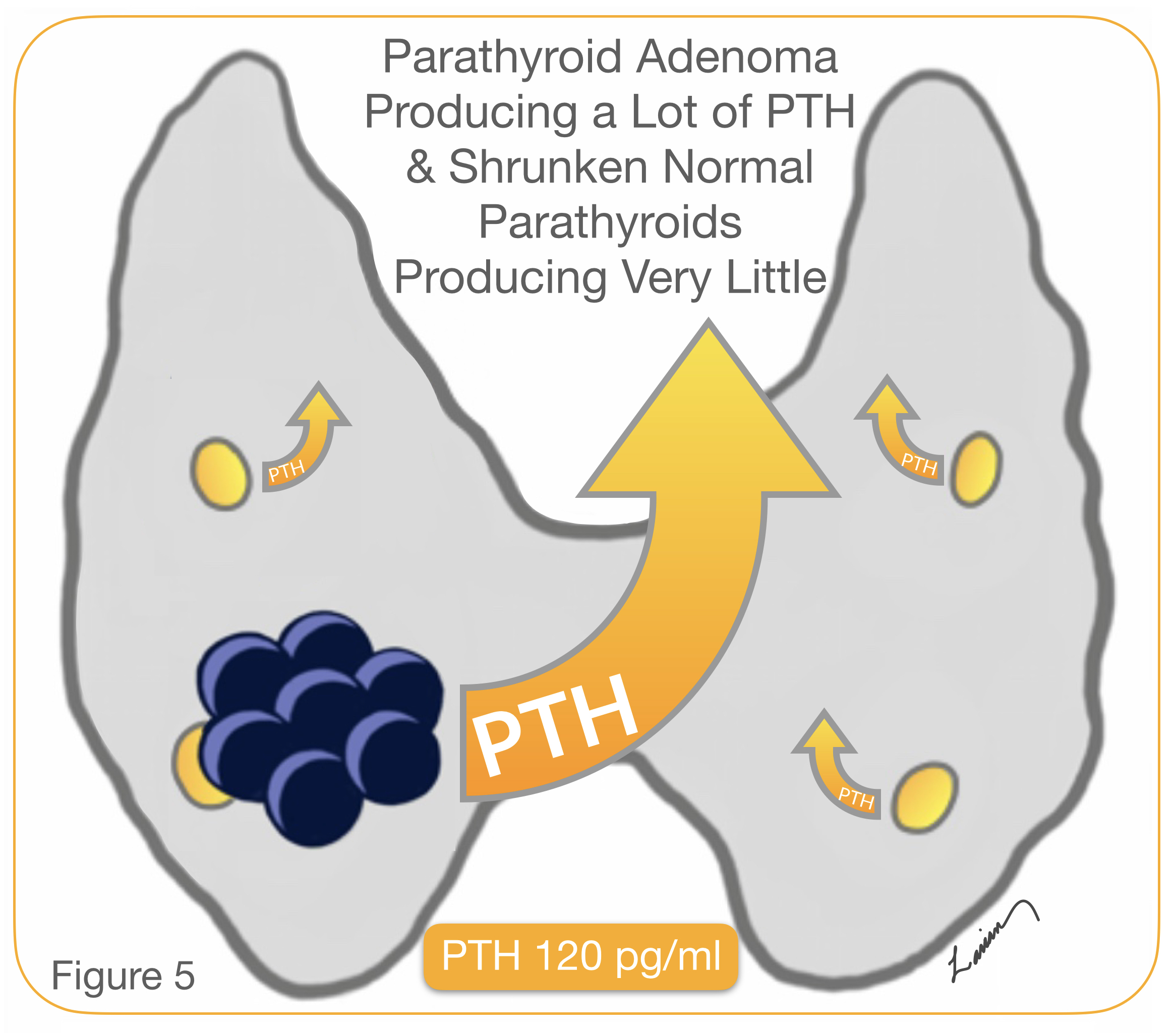
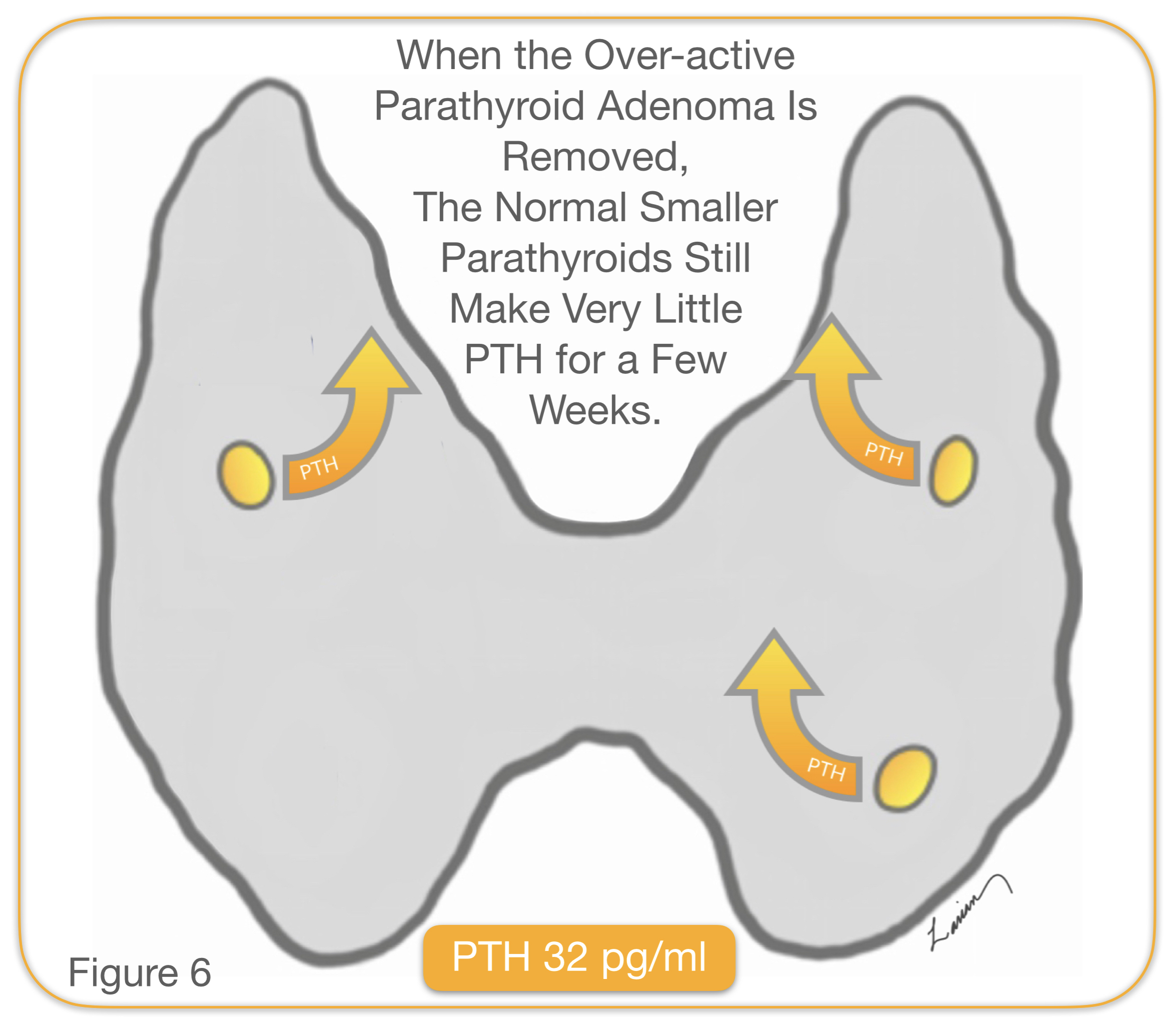
In the 1990’s 4 gland assessment was done by looking at all 4 glands and doing a biopsy. However, this was fraught with problems because doing a biopsy was not always able to distinguish between a normal and over functional gland. Additionally, when there is one parathyroid adenoma (a benign tumor in the parathyroid gland) that is overworking, the remaining 3 glands become much less active and shrink and become smaller (Figures 2 & 3); looking for these smaller parathyroids and biopsying them can potentially injure them and ultimately lead to permanent hypoparathyroidism. Since hyperparathyroidism is caused by one or more abnormal glands producing too much PTH, the modern version of 4 gland assessment is to remove the enlarged gland and then look at the physiologic function of the remaining glands by checking how much PTH they are producing & putting into the blood stream; the only accurate way to test PTH levels is by checking the amount in the blood stream (Figures 3 & 4). This is called rapid intra-operative PTH testing. So after removal of one gland if the PTH level goes down by more then 50% in 10 minutes then the remaining glands are dormant. If the PTH does NOT go down by 50% then that means one or more of the remaining glands are abnormal and should be investigated.
In case of parathyroid hyperplasia the 4 gland assessment with the help of rapid PTH testing really makes a huge difference; it can not only tell you if you have reduced the number of abnormal parathyroid glands appropriately, but also that the last remaining gland is working adequately to minimize the risk of permanent hypoparathyroidism.
Surgical Steps
- PTH level testing is performed in a pre-surgery unit while placing the IV
- Patient comes into the operating room and lays flat on the bed
- Intravenous sedative (through the IV), and the patient falls asleep while breathing on his or her own (NO BREATHING TUBE NEEDED). This is an option, as patients rarely choose to be fully awake
- Local anesthetic given
- Skin cleaned & sterilized
- Surgery
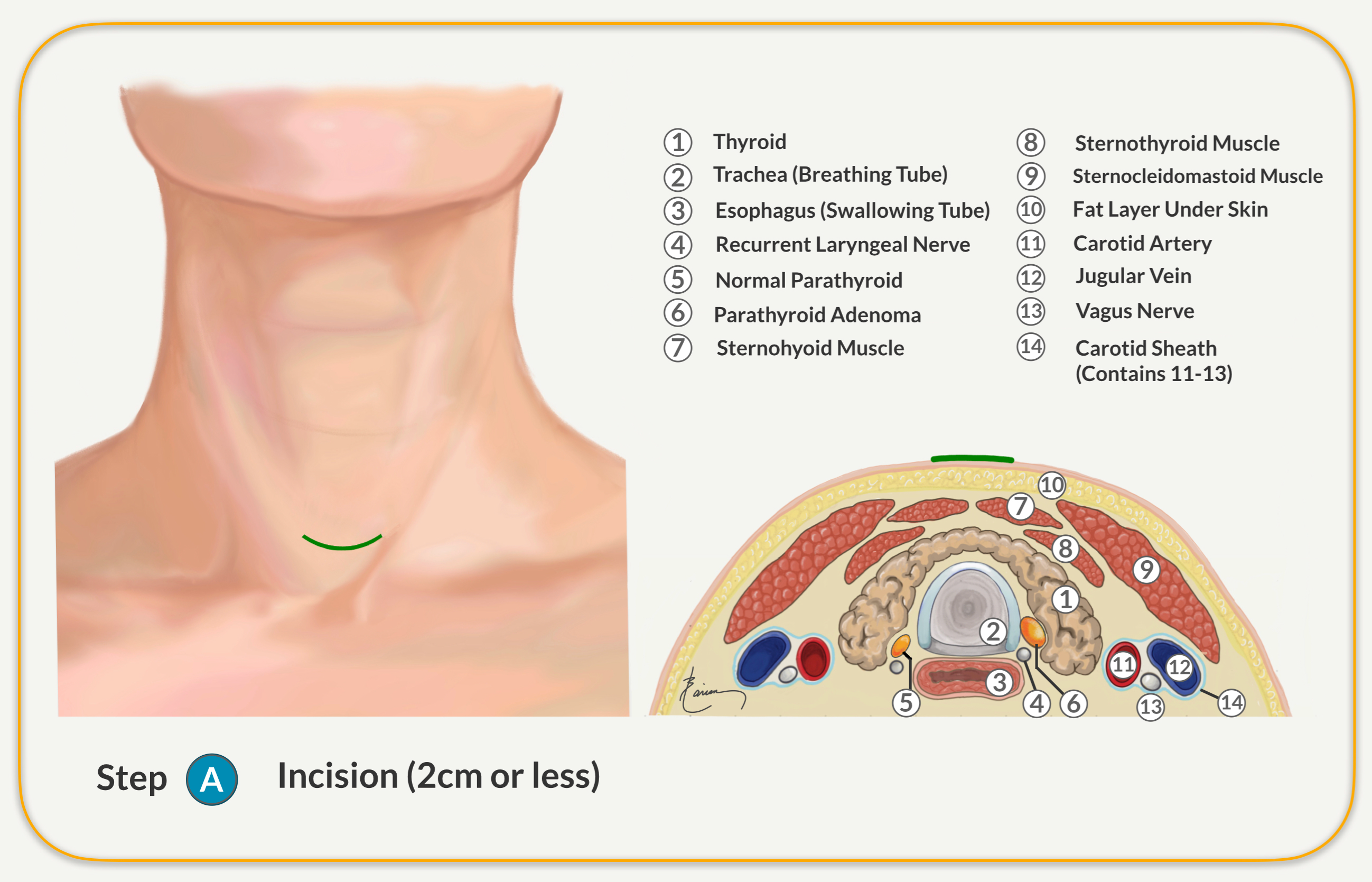
- Incision 1.5 to 2 cm (less then an inch)
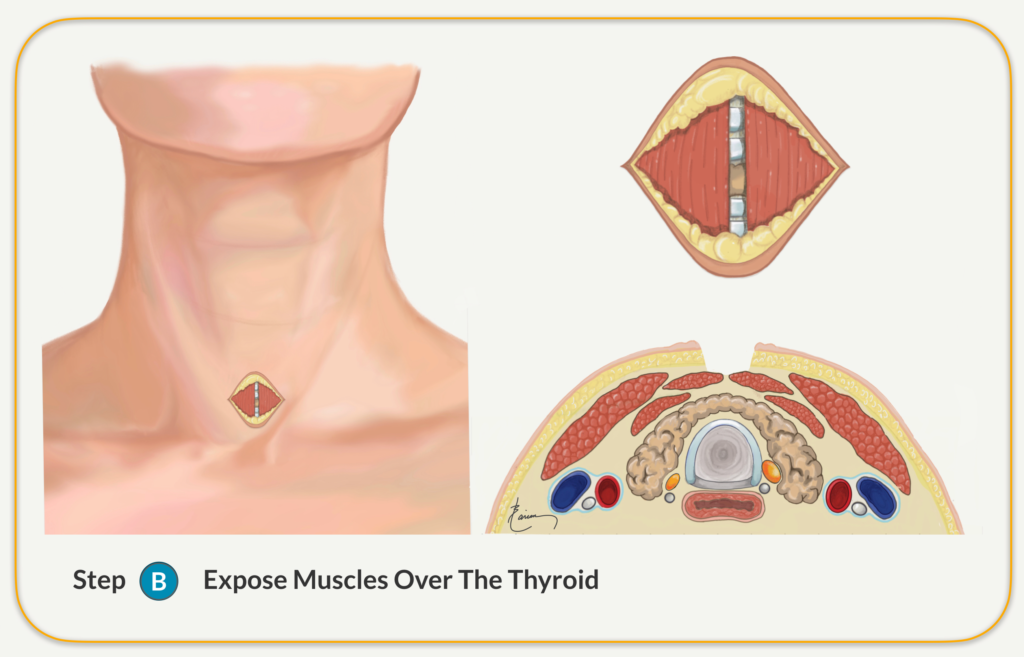
- Expose the sternohyoid muscle (covering the thyroid & trachea)
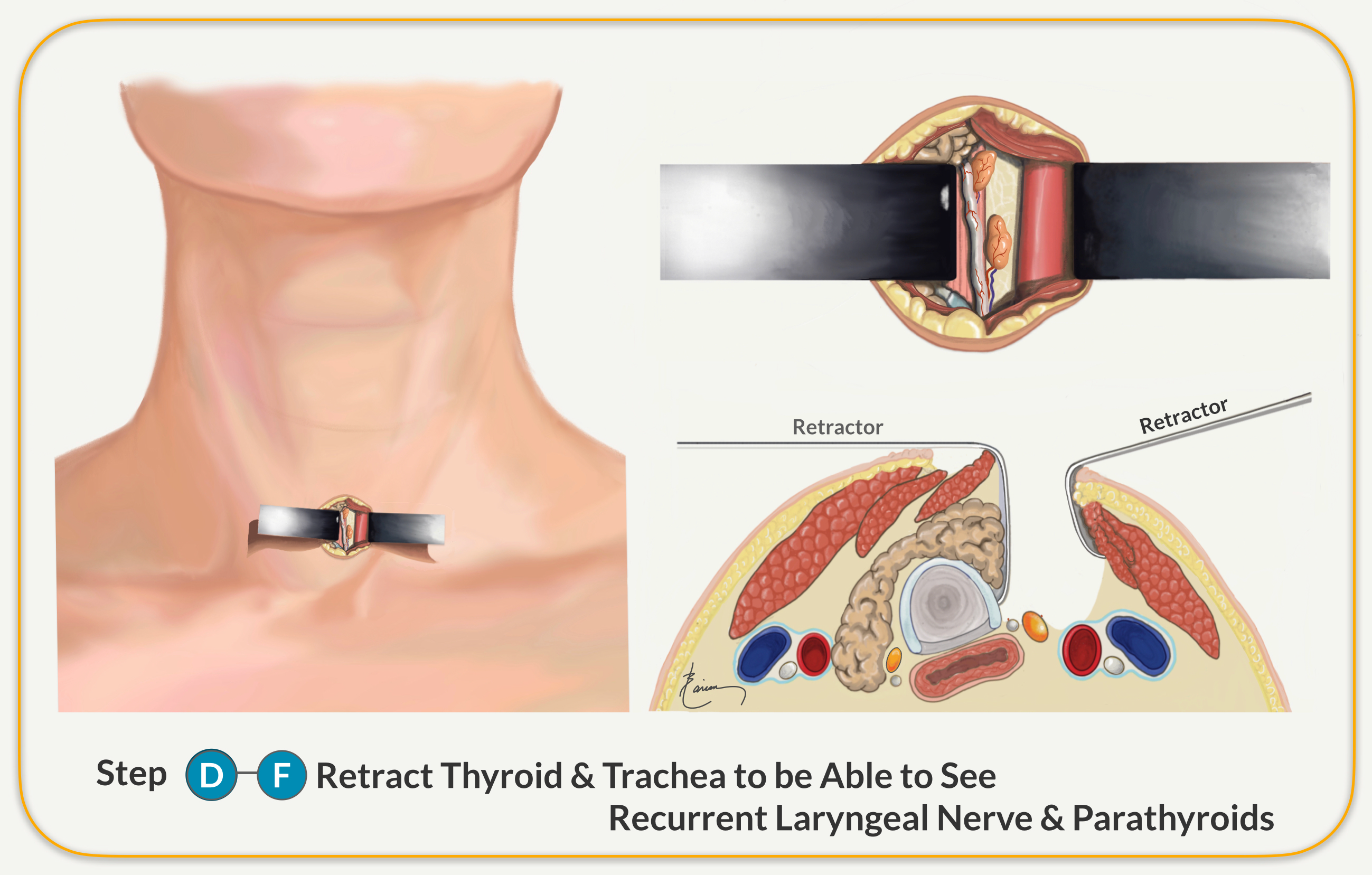
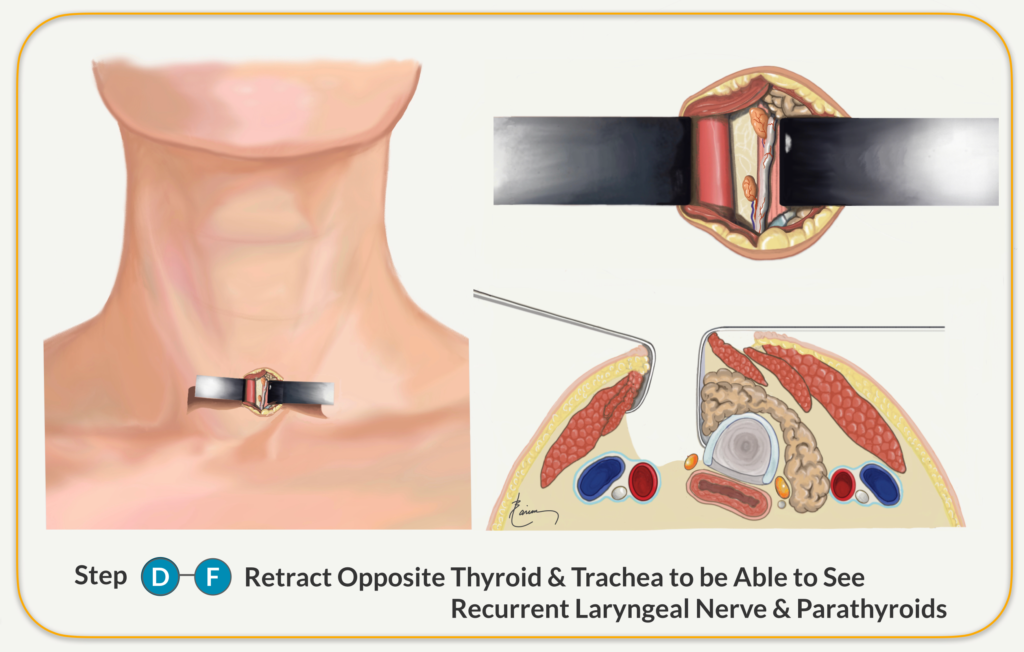
- Separating away the thin muscles from over the thyroid (not cutting the muscle) on the side where scans showed the abnormal parathyroid gland
- Follow the RLN, and protect the nerve
- Check pre-excision blood PTH level. Dissect the abnormal parathyroid gland and separate from the thyroid, lymph nodes, and fatty tissue
- Identify the blood vessel that feeds the abnormal parathyroid, clamp & close the vessel
- The surgeon identifies the blood vessel that feeds the abnormal parathyroid and clamps and closes the vessel
- Check another PTH level at 5, 10 & 15 minutes to make sure it goes down by more then 50% & stays low
- Examine the area to make sure there is no bleeding from the small blood vessels
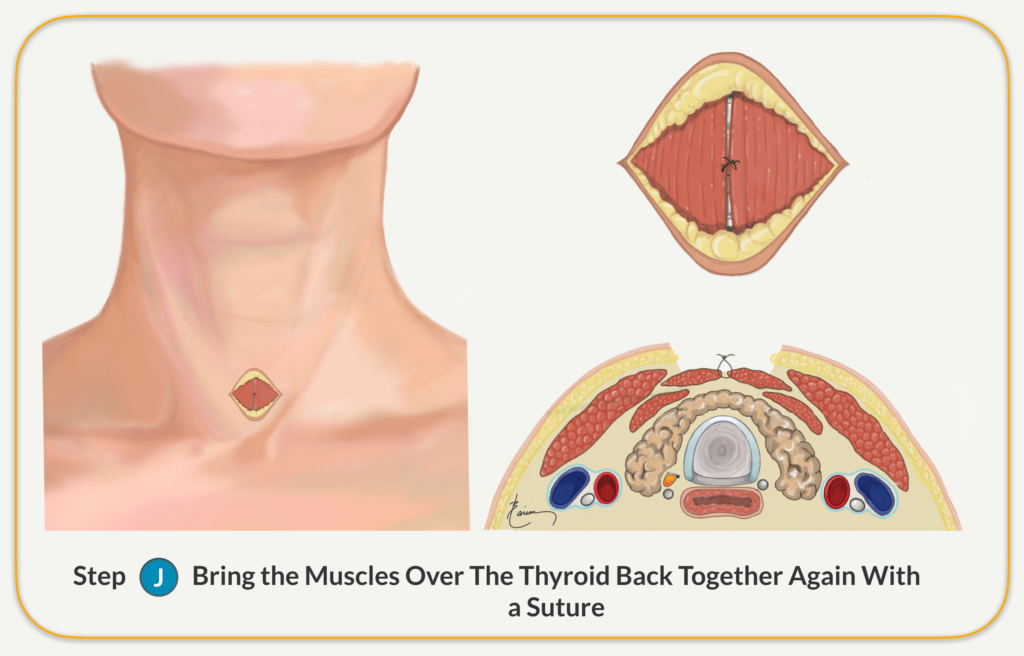
- Bring the muscles over the thyroid together again
- Suture the skin close in multiple layers with absorbable sutures that are under the surface.
- Place a steri-strip (medical grade tape) on the incision for added protection
- Fully awaken the patient and go to recovery room
- The patient remains in the recovery room until he or she is fully awake
- The patient is released to go home usually after an hour
Operative Time Can Be Very Short or Long
The length of time for parathyroidectomy for hyperplasia varies a lot, although usually is around an hour. Some times it can be much longer if the person has a large thyroid goiter, large nodules, or has inflammation in the area due to Hashimoto’s Thryoiditis. Some people have parathyroid glands that are in unusual locations and need to be gently and cautiously found.
Almost all patients are sent home within an hour or two of the operation. Everyone is placed on calcium, vitamin D & magnesium supplements to prevent low calcium levels.
If you are considering minimally invasive parathyroidectomy, schedule a consultation with Dr.
Larian or give us a call at 310.461.0300 today!