
Parathyroid Disease Symptoms
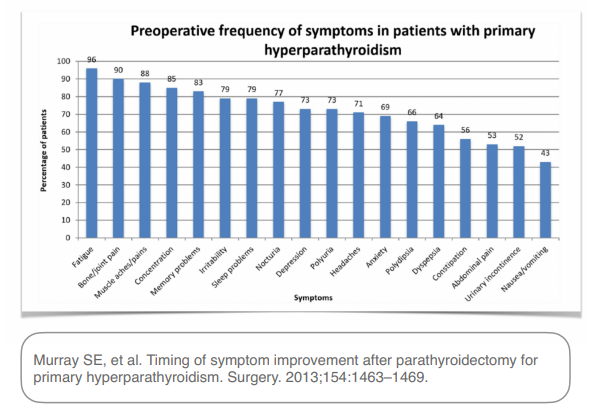
Hyperparathyroidism is a unique disease in that it affects every patient in a different ways. Almost all hyperparathyroid patients experience parathyroid disease symptoms, however, one of the reasons that so many hyperparathyroid patients go undiagnosed or are misdiagnosed is because the symptoms are wide-ranging, are not obvious, and can be associated with several other diseases. As a result, symptoms of hyperparathyroidism can be hard for an inexperienced physician to pinpoint.
Every cell in our body uses calcium to function properly; therefore having high calcium levels can cause a wide range of symptoms. However, the severity of symptoms does not always correlate to the calcium level. This means you do not necessarily have to have very high calcium levels in order to experience extreme symptoms, and, vice versa, you may have very high levels of calcium with almost no symptoms present (more information about Calcium Levels & Your Parathyroid Symptoms below). When you ask a parathyroid patient about their symptoms they will tell you that they no longer feel like themselves, they feel old, their body aches, they don’t enjoy life like they used to, etc. For some patients, these symptoms are obvious and for others, they are less pronounced. Because the symptoms of hyperparathyroid disease are so non-specific and patients can experience any combination of symptoms, a lot of patients are not properly diagnosed as having a parathyroid disorder, and continue to live in pain. This is why it is crucial to find a parathyroid expert, to correctly diagnose the condition and start you the path of treatment.
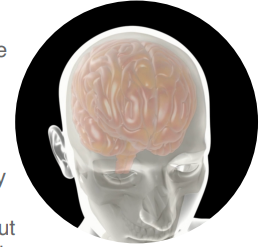
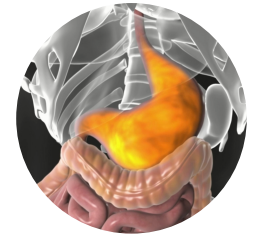
The following symptoms are considered to be the major symptoms of parathyroid problems (known by the pneumonic: moans, bones, groans, stones), but they occur later in the disease and are not the most common symptoms: Mental Status Change (psychic moans) Bone Fractures (achy bones) High Stomach Acidity (stomach groans) Kidney Stones
Below is a more comprehensive list of the hyperparathyroidism symptoms patients may suffer from as a result of the disease:
- Chronic fatigue
• Always tired
• Decreased energy
• Don’t feel like leaving the house and participating in activities they used to enjoy
- Just don’t feel like yourself
• Never feel 100% well or healthy
• Don’t feel “normal” anymore
• It is hard to explain to others, but
you know something is not right
- Just don’t feel like yourself
- Feel old
• You are getting older, but it feels like you’ve suddenly aged
• Easy to mistake this for menopause, hyperparathyroidism is also a hormonal change affecting many organs
- Brain fog
• Cognitive dysfunction
• You can’t concentrate like you used to (both on simple tasks and big projects)
• Mental fogginess
• Forgetfulness – you find yourself forgetting things easily
• Loss of motivation to be active or do things
- More irritable than usual
• You aren’t as happy as you used to be
• Little things bother you more than they used to
- Reoccurring headaches
- Poor sleep
• You don’t sleep as well as you used to
• You can’t sleep through the night; wake up several times during the night
• You have trouble falling asleep
- Anxiety
- Depression
- Joint pain
- Muscle weakness
- Bone pain
- Bone fractures
- Osteoporosis and Osteopenia
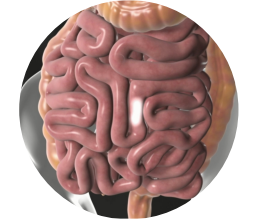
- Gastro-Intestinal issues
• Constipation
• Abdominal pain (stomach aches)
• Acid reflux
• Heartburn
• GERD
• Peptic ulcer disease (stomachulcer)
• Anorexia
• Acute pancreatitis
• Some cases weight loss
- Decreased libido (sex drive)
- Kidney stones
• Can potentially lead to kidney failure
- Frequent urination
• Excessive night time urination
- Heart palpitations (arrhythmias)
- High blood pressure
- Frontal hair loss
disease increases and life expectancy decreases. However, this does not need to be the case! When the parathyroid tumor is removed, and the disease is cured most of the problems caused by hyperparathyroidism is reversed, or stopped from progressing.
Several medical studies have shown that 95% of patients feel better almost immediately after surgery. In as quickly as 72 hours post-parathyroidectomy, most patients feel an improvement in numerous symptoms, specifically with a dramatic decrease in bone pain/aches. Interestingly, even the patients who do not report any symptoms find that they feel much better after surgery.
“After years of vague symptoms and months of severe symptoms, just days after surgery I feel better than I have in such a long time.” –Jennifer, Washington DC
Calcium Levels & Your Parathyroid Symptoms
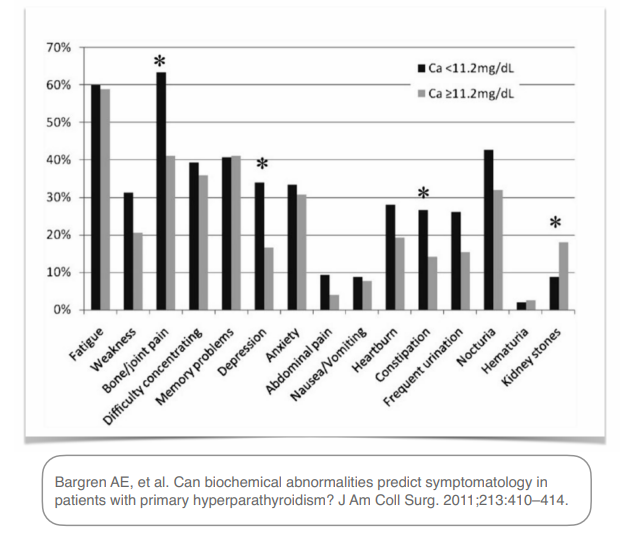
The severity of your symptoms does not always correlate your calcium levels. Therefore, it is possible to have debilitating symptoms with only a slight elevation in calcium levels on laboratory testing. Alternatively, you could have very high calcium levels and experience little to no symptoms. In the table below, the frequency of symptoms is listed and compared when calcium is less 11.2 mg/dL to more then 11.2 mg/dL (essentially 1 unit above the laboratory normal). And it clearly shows the frequency of symptoms not being effected by the calcium level alone.
The reason for this is that the degree of symptoms has to do with how much of an increase you have had in calcium compared to the level your body wanted your calcium to be years ago before you had hyperparathyroidism. So if your body prefers calciums in the lower end of normal (laboratory normal range) then being only slightly above normal is a huge increase; for example if your calciums liked being around 8.8-9.0 and now it’s between 10.2-10.4, that is a huge increase. What does this mean? Do not let your calcium level alone fool you or your physician into thinking that you do not have parathyroid disease! Hyperparathyroidism may present in many different forms on laboratory tests, such as normocalcemic or normohormonal hyperparathyroidism shown in the table below. These are not different diseases but rather different ways hyperparathyroidism presents on laboratory tests. your calcium and/or PTH levels show an imbalance and are even slightly elevated, and you are having some symptoms consistent with hyperparathyroidism, it is time to find a parathyroid specialist, like Dr. Larian, who can properly diagnose you. Dr. Larian has extensive experience in diagnosing patients based off of their symptoms, calcium levels, and PTH levels, and has seen countless manifestations of the disease. Many of the patients we see here at the CENTER have gone years without being diagnosed, and we are able to diagnose them during their first inoffice, or even Skype, consultation. We will not tell you that your calcium is “not that high” or to “wait a few more months or another year to see if the levels come down” because we know the parathyroid tumor will not go away on its own and therefore there is no reason to delay treatment.
FAQ (Frequently Asked Questions)
- What Happens If Hyperparathyroidism Is Left Untreated?
- Can You Die From Hyperparathyroidism?
Yes, but it is not caused usually directly by increased calcium or PTH but rather by the impact of this disease on other organs such as the kidney and the heart.

- Can Symptoms Alone Be Used as the Reason to Treat
Hyperparathyroidism?
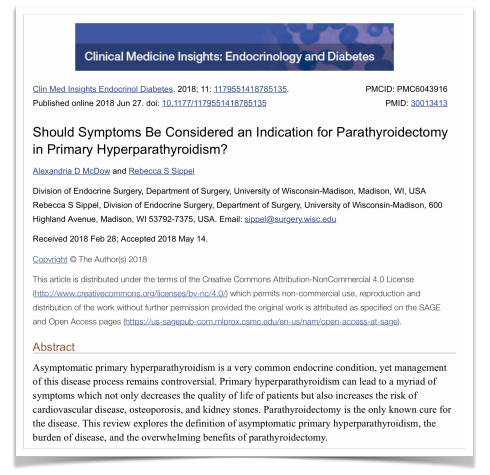
This is a subject of great controversy. So much so that there is an international workshop that reviews the literature to try to answer this question. There is clear evidence that if kidney stones, or bone loss are present then surgery is absolutely indicated. In terms of other symptoms the answer is not so clear. And that is because there as many articles showing great improvement of symptoms with treatment as there are showing minimal improvement. However, what remains important is for the person who has hyperparathyroidism to consider the impact of the disease on their own body; if they can clearly feel that their quality of life is being affected then they should take action. The article below has a good summary of the research.
- Can Hyperparathyroidism Be Cured Permanently?
- Does Osteoporosis Improve After Parathyroid Surgery?
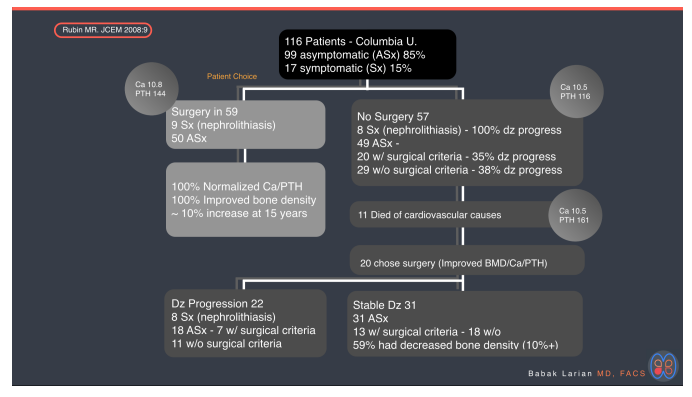
An elegant study by the group at Columbia University which was done over a period of 24 years, showed that all (100%) the patients that had parathyroid surgery had improvement of their bone density. This improvement was present even 15 years after surgery.
- Does Hyperparathyroidism Increase The Risk of Developing Cancer?
Find Out If You Have Hyperparathyroidism Today!
If you are ready to feel like yourself again, contact the CENTER for Advanced Parathyroid Surgery today! Dr. Babak Larian is a world-renowned parathyroid expert who cures hundreds of parathyroid patients every year, and you can be next! Call 310.461.0300 to schedule your hyperparathyroidism consultation.