
What Does Calcium Do
Calcium is an essential mineral for the human body. Every cell in our bodies uses calcium to function properly. It is also the most abundant mineral in the body.
- BONE: Calcium is a very strong and versatile element, which is why our bones are made up of calcium. Our bones also act as a storage area for calcium. The bones are constantly absorbing calcium, remodeling themselves, and giving away calcium when the rest of the body needs it (sort of like a calcium savings account).
- COMMUNICATION INSIDE THE CELL: Every cell in the body uses calcium to send messages and communicate with the different parts of the cell.
- MUSCLES: Muscles also use calcium to flex, so with calcium imbalance, the muscles either cramp or get weak.
- CLOTTING: Calcium plays a key role in formation of clots which stops bleeding.
- HEART RHYTM: Calcium is used by in the heart to maintain and control the rhythm and pace of the beating heart.
- ENZYME FUNCTION: Many enzymes need calcium to be present in order for them to function properly and perform the chemical reactions they are in charge of. Without calcium they will not be able to function.
- NERVES: All the nerves in the body use calcium to send signals to the next nerve, muscle or organ (intestines, heart etc…). This is why calcium imbalance can cause so many neurologic symptoms, including tiredness, anxiety, depression, poor sleep, poor concentration, etc…)
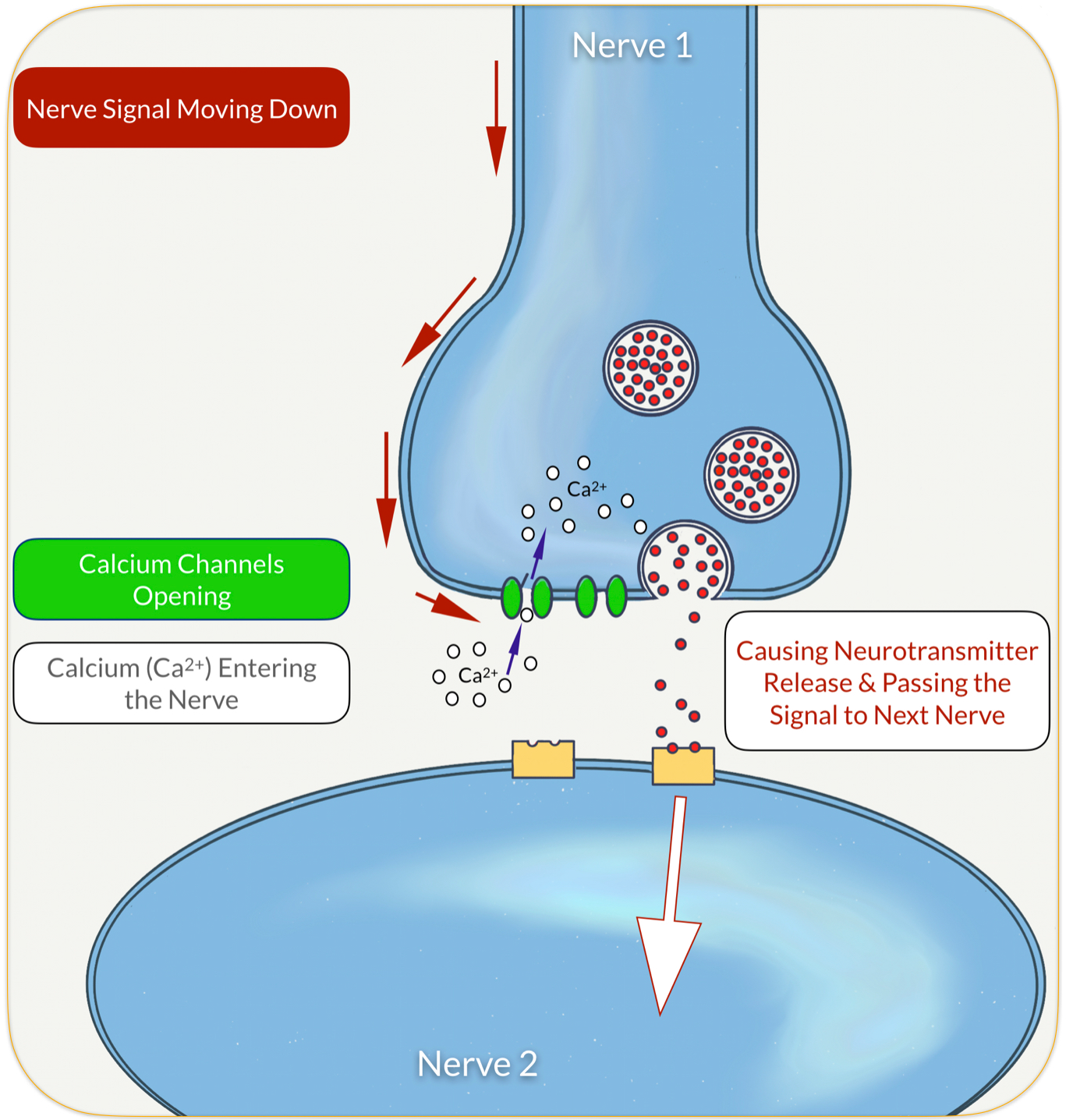
When a nerve signal goes down a nerve, in order for a signal to be passed on to the next nerve, calcium channels open and calcium rushes into the end of the nerve. The amount of calcium coming into the cell controls the intensity of the signal being passed on to the next nerve. So as an example, if the nerve expects & is accustomed to the amount of calcium outside of it to be 9.0 and opens enough channels to get a signal magnitude 90, then an equivalent of strength 90 neurotransmitters (ie. serotonin, dopamine etc..) will move between the end of Nerve 1 to Nerve 2. This is how signal is forwarded from one nerve to the next. But if the amount of calcium outside of the nerve instead of 9.0 is 11.0, then when it open the calcium channels expecting a signal magnitude 90, more calcium then expected will come into the nerve and the signal passed to Nerve 2 will be magnitude 110. Much more then expected!!! As this continues with all nerve signals then nerve/brain function becomes inefficient and cause breakdown of nerve function, thus causing nerve issues: fogginess, fatigue, anxiety, memory loss, poor sleep etc…
What Is Calcium Attached To In The Blood & How to Accurately Measure It
98% of the calcium in our body is stored in our bones. The rest is spread through out the body; majority of the remaining 2% is in the bloodstream, with a small fraction of that being inside all the cells in the body (where most of the work or effect of calcium takes place). The calcium in the blood stream is only active and ready to do work if it is not attached to any other component; 50% of calcium in the blood stream is free floating and in this form. The other 50% is either attached to albumin (a protein that floats in the blood) or to other chemicals (citrate or phosphate); when attached, the calcium is not free and available to be used by cells. So the best reflection or indication of the true level of calcium in the blood is the number of free calciums floating in the blood (otherwise known as ionized calcium or free calcium).
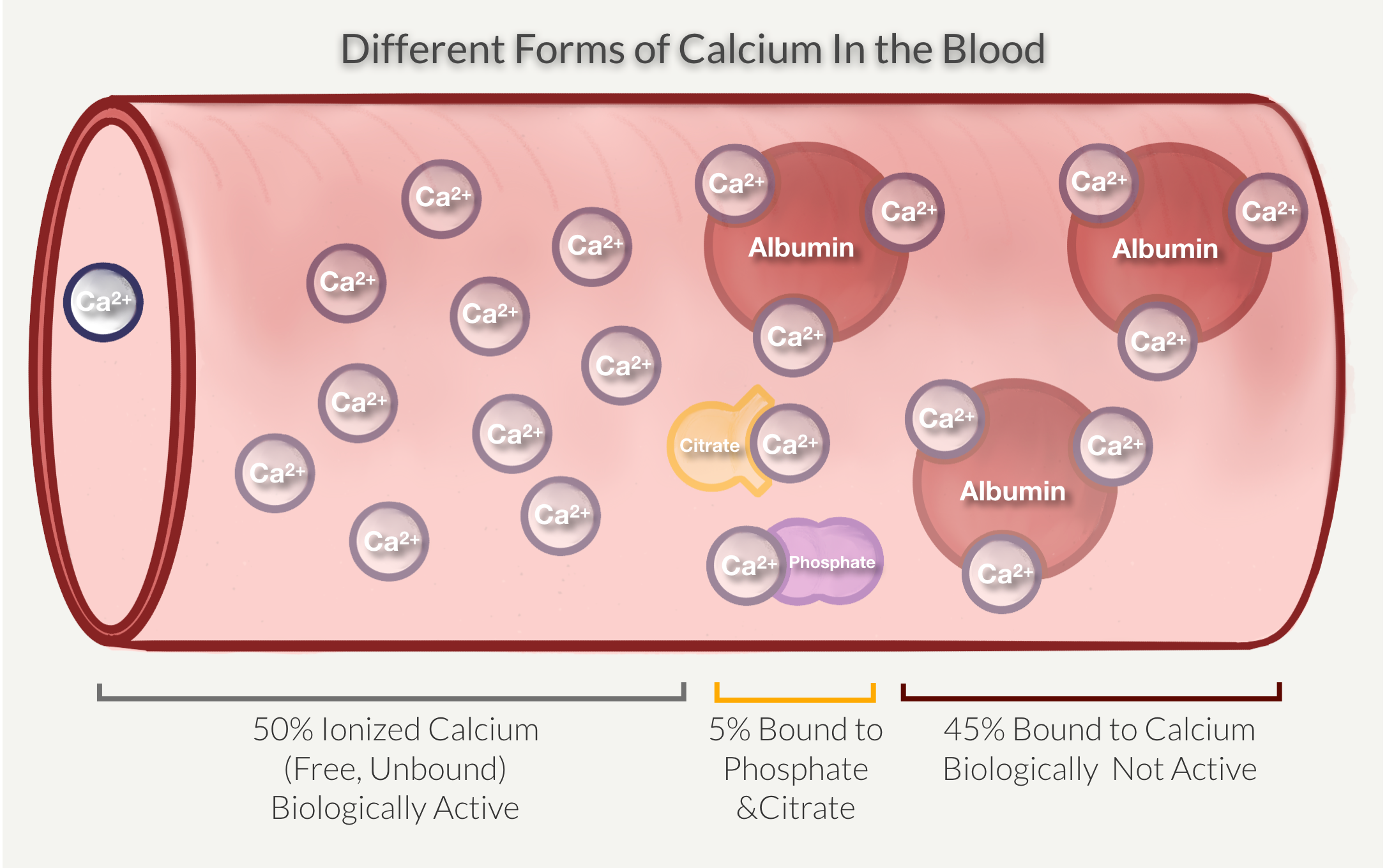
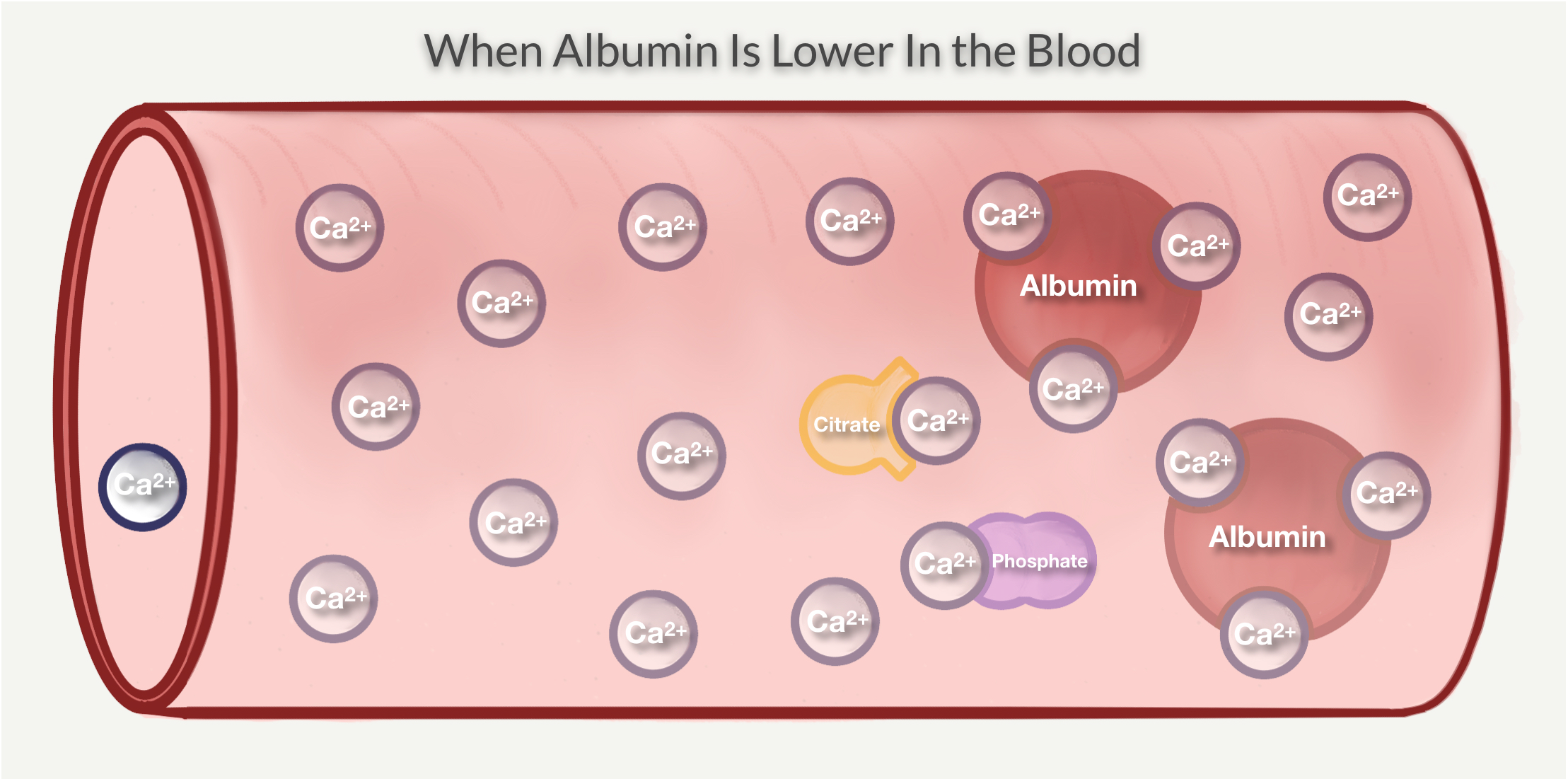
When a blood calcium level lab test is done the number that is given is the total amount of calcium present in the blood: free/ ionized calcium + Bound Calcium. But that number is very much affected by how much albumin is in the blood. In the figure above (Example 1) there are 22 calcium elements, 11 that around bound (mostly to albumin), and 11 that are free floating & ready to be used. In the figure below there are still a total of 22 calcium elements in the blood, but only 8 are bound and the remaining 14 are free floating, which means the true active calcium ready to be used is much higher (14 vs. 11). So this person (example 2) has a much higher level of active and useful calcium in the blood & may be hypercalcemic despite have the same total amount of calcium in the blood.
There are 2 ways to get the level of active calcium in the blood:
- Calculating & correcting for albumin levels in the blood. So if the blood calcium level is 10 mg/dL & albumin is 4 mg/dL the calculation will be [(4 — 4 mg/dL) x 0.8 + 10]= 10 mg/dL (normal range). While if the blood calcium is 10 mg/dL & albumin is 3 mg/dL then the calculation will be [(4 — 3 mg/dL) x 0.8 + 10]= 10.8 mg/dL (hypercalcemic range).
- Or measuring the free calcium directly (or ionized calcium) by ordering an ionized calcium blood test. The only issue with this type of blood test is that the machine is very sensitive and if the laboratory is not performing this test frequently and calibrating and servicing the machine regularly, the results may be inaccurate.