
PARATHYROIDECTOMY - With Local Anesthesia
Minimally Invasive Parathyroidectomy (MIP) with Dr. Larian
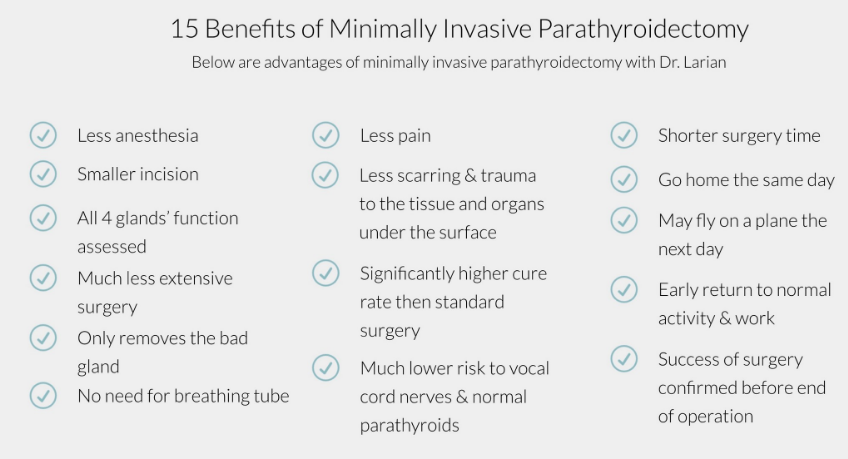
Although it is often thought that minimally invasive surgery simply means a smaller incision, in terms of MIP it is not the main or only objective. Minimally Invasive parathyroidectomy’s main objective is to cure hyperparathyroidism with as little disturbance of the tissue under the skin, other organs and structures (thyroid, vocal cord nerves, blood vessels, normal parathyroids) as possible.
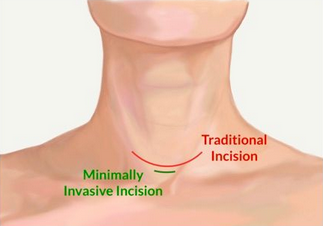
Scar tissue will form in any area of the body that is operated on, and scarring can have long term consequences in the neck; as we speak and swallow the voice box, trachea (breathing tube), and the area around the thyroid move up and down, and scarring can interfere with this important mechanism. Therefore, it is vital the surgeon takes great care
when operating on the parathyroid glands and does not interrupt or damage this delicate mechanism. Additionally, the more extensive the surgery is, the greater the risk of damage to the recurrent laryngeal nerves (voice box nerve) and dormant shrunken parathyroid glands.
A truly minimally invasive parathyroidectomy minimizes all of these risks, while being able to treat any form of primary hyperparathyroidism (single adenoma, double adenoma or hyperplasia). It utilizes all the latest techniques available to completely cure the patient (including intra-operative PTH testing, pathology testing during surgery, and when necessary radio guidance, comprehensive neck exploration or 4 gland exploration). The true advantage of Dr. Larian’s minimally invasive parathyroidectomy with individualized 4 gland assessment is that each patient receives the care that is appropriate for them. No two patients are alike and all deserve to be treated on a personalized basis.
Loco-Regional Anesthesia
Without Using a Breathing Tube
The nerves that go to the are of the front of the neck, thyroid and parathyroids travel from the spine. They leave the spine on the side and go to the area around the thyroid gland. These nerves allow us to feel any pain or discomfort in this area. The nerve roots come out of the second, third & fourth cervical (neck) spines, designated as C2, C3 & C4.
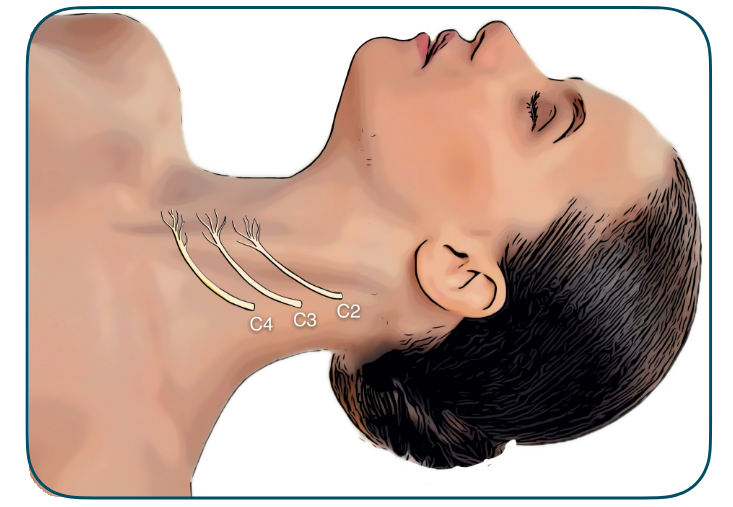
We take advantage of this nerve anatomy and inject long acting anesthetic (lasting 4-6 hours) that will completely numb up that side of the neck. This will allow Dr. Larian to perform parathyroid & thyroid surgery without the need to use a breathing tube. Most patient will choose to have some sedative given to them so that they sleep during the surgery and wake up once completed. But for patients that are generally very calm, it can be done fully awake.
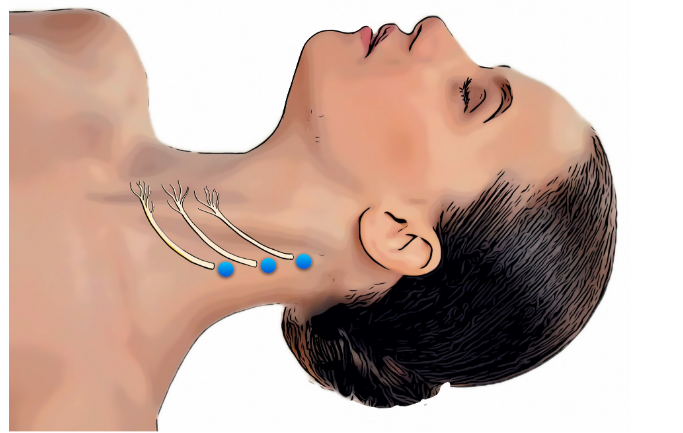
In the figure above the injection areas are marked by blue dots the injections are NOT into the nerves but rather 1cm away from the approximate area they come out of the spine.
Who is a Candidate for Loco-Regional Anesthesia?
The criteria include:
- Having a thin neck so that the anatomy of the spine can be felt
- Not having sleep apnea
- Not having asthma
- No previous neck surgery
- Not suffering from chronic cough
Surgical Steps
1. PTH level testing in pre-surgery unit while placing the IV
2. Patient comes into the operating room and lays flat on the bed
3. Intravenous sedative (through the IV) – patient falls asleep while breathing on their own (NO BREATHING TUBE NEEDED).
This is an option, rarely patients choose to be fully awake
4. Local anesthetic given
5. Skin cleaned & sterilized
6. Surgery
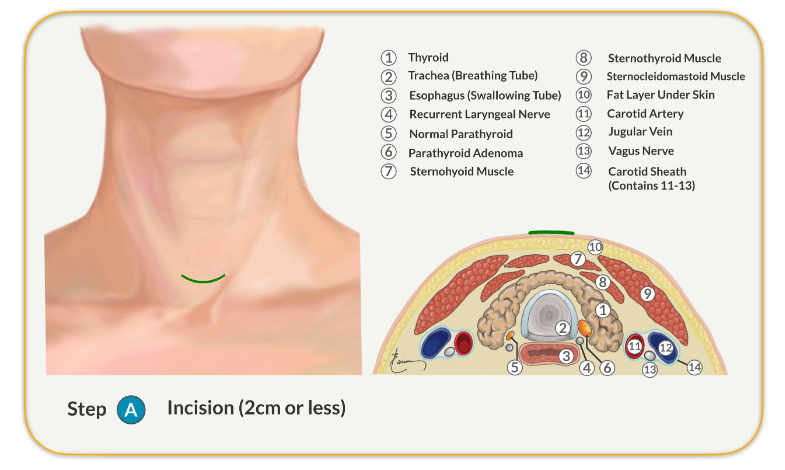
A. Incision 1.5 to 2 cm (less then an inch)
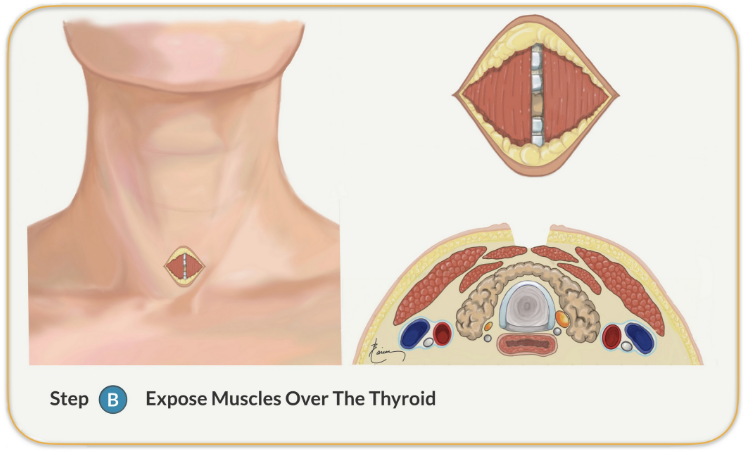
B. Expose the sternohyoid muscle (covering the thyroid & trachea)
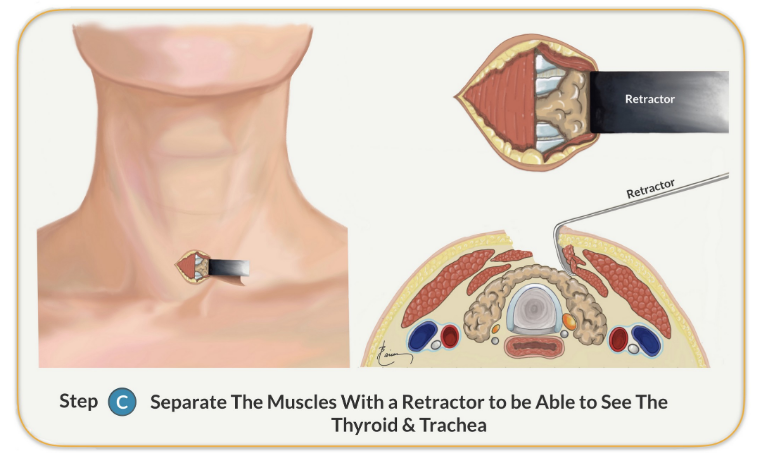
C. Separating away the thin muscles from over the thyroid (not cutting the muscle) on the side where scans showed the abnormal parathyroid gland
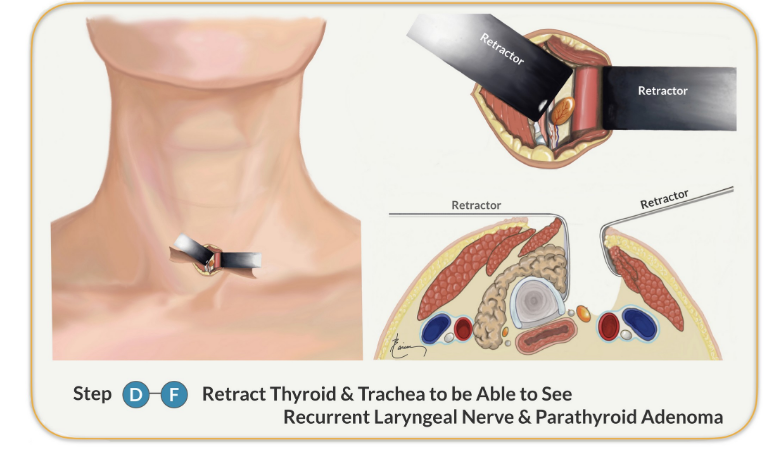
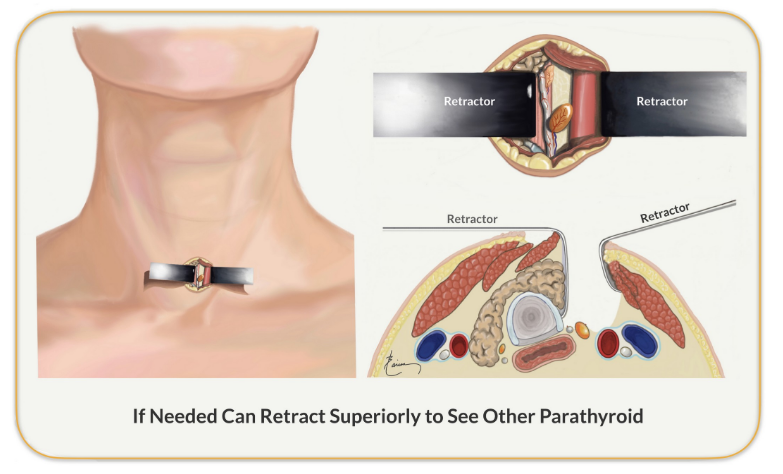
D. Find the recurrent laryngeal nerve (RLN) deep to the thyroid
E. Follow the RLN, and protect the nerve
F. Check pre-excision blood PTH level. Dissect the abnormal parathyroid gland and separate from the thyroid, lymph nodes, and fatty tissue
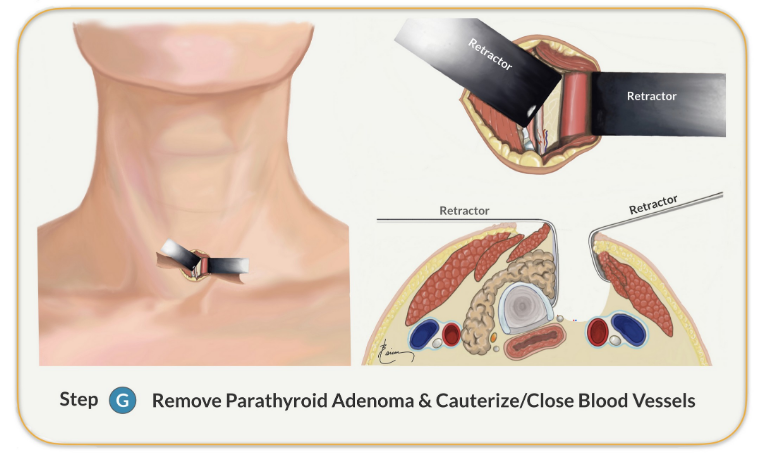
G. Identify the blood vessel that feeds the abnormal parathyroid, clamp & close the vessel
H. Check another PTH level at 5, 10 & 15 minutes to make sure it goes down by more then 50% & stays low
I. Examine the area to make sure there is no bleeding from the small blood vessels
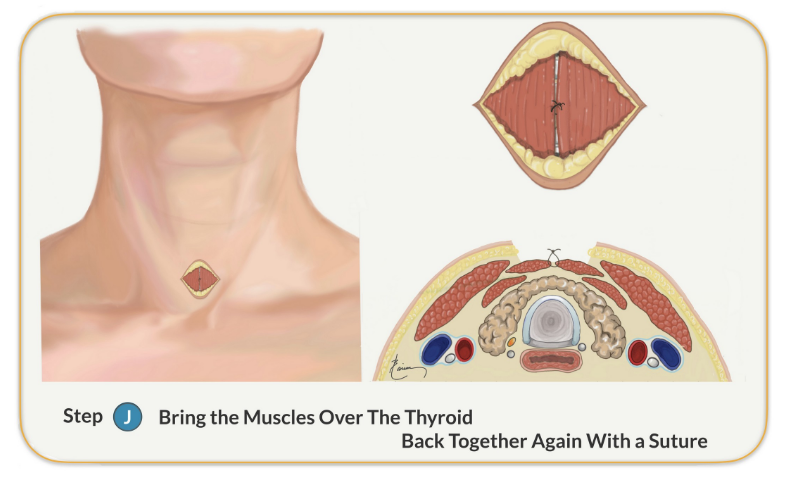
J. Bring the muscles over the thyroid together again
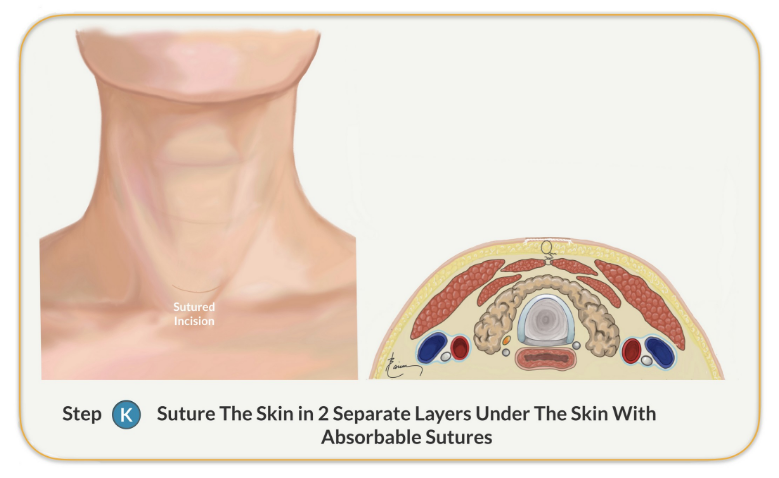
K. Suture the skin close in multiple layers with absorbable sutures that are under the surface.
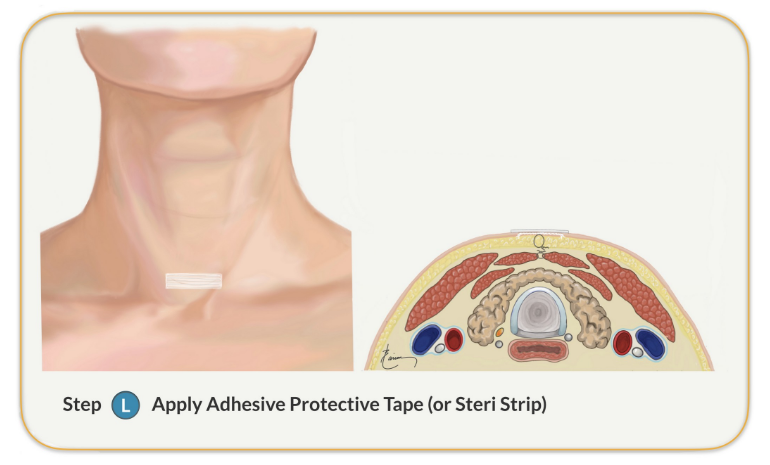
L. Place a steri-strip (medical g rade tape) on the incision for added protection
M. Fully awaken the patient and go to recovery room
N. Remain in the recovery room until fully awake
O. Release to go home usually after an hour
Average Operative Time Is Less Than 20 minutes
The quickness of minimally invasive parathyroid surgery does not only mean minimal anesthesia and avoidance of unnecessary dissection but little operative time as well. Using this technique, the average operative time is less 20 minutes, which can be compared to the standard parathyroid surgery that takes two hours or more.
Thanks to the advantages of Minimally Invasive Parathyroidectomy, almost all patients are sent home within an hour or two of the operation. Most importantly, the complication rate is less than half compared to the standard option.

General Instructions For Your Parathyroidectomy
Pre-Admission Testing
All patients scheduled for surgery must have the following tests done at the facility of their choice up to 1 month before their planned surgery:
- Chem 7, CBC, PT, PTT (within one month of surgery)
- EKG & Chest x-ray (age 50 and above, accepted up to 6 monthsnprior to surgery)
The Day of Surgery
Timing Your Arrival
Please plan to arrive at La Peer Surgery Center 1 hour prior to your surgery time, or Cedars-Sinai Medical Center 2 hours prior to your surgery time. You will be called by the hospital or surgery center to confirm your surgery on the day prior to your surgery. If they have not called by 4:30 pm that day, please call our office.
Food & Drink
Do not eat after midnight before your planned surgery. You can have clear liquids up to 8 hours before surgery. You may take your usual asthma, heart, blood pressure or seizure medication with a small sip of water that morning, unless otherwise advised.
Medications
Please do not take any aspirin, ibuprofen, Alleve or other over the counter pain medications for one week before your surgery. You may use Tylenol in the week before surgery. If you are a diabetic, consult with your physician before taking your medication.
If you develop a cold, sore throat, fever or any illness, please call Dr. Larian’s office prior to your surgery.
Parathyroidectomy FAQs
If you need parathyroid surgery, it is important to know what to expect. The following are some of the most frequently asked questions about parathyroidectomy :
- What type of anesthesia will I have?
Most people are able to have local anesthesia with or without a small amount of sedation (relaxation medicine) for parathyroid surgery.
- How long will I be hospitalized
Parathyroidectomy does not require hospitalization, unless there are other medical issues such as heart, lung or kidney disease. 98% go home after spending between 1-3 hours in the recovery room and feel well enough to travel to their home or hotel.
- Will I have pain after the operation?
Minimal amounts because we are not cutting muscles or major organs. Most patients are able to manage the pain with Tylenol.
- What are the advantages of the minimally invasive thyroid surgery?
Less trauma to the tissue under the surface, as well as less trauma to the thyroid, remaining normal parathyroid glands, and less chance of injury to the vocal cord nerves.
- How big is my incision?
1.5 to 2 centimeters (less then an inch)
- Will I have a scar?
That depends on your healing properties, but the chances are exceeding low that you will have a visible scar.
- What is the purpose of the pre-surgery tests such as Sestamibi, 4D parathyroid CT scan and Ultrasound?
To identify the abnormal (or bad) parathyroid gland so that you can focus the surgery on the bad gland and leave the good glands undisturbed.
- Will I have stitches?
Yes, but all under the skin that absorb on their own and don’t need to be removed.
- When will I know the findings of the surgery?
Immediately after surgery you will have preliminary results, and 3 working days later the final pathology report.
- Will I have any physical restrictions after surgery?
Yes, we suggest no strenuous exercise for 2-3 weeks after surgery so as to not cause a quick rise in the blood pressure and cause a healing blood vessel to open and bleed. However, we do not want you to be in bed during the day, but rather slightly active and going for walks twice daily to get the blood circulating so as to help rebalance the body sooner.
- What are the complications and possibilities unique to parathyroid surgery?
Most common ones (although still rare) are: Not finding the abnormal (bad gland) is a rare possibility that can occur if the gland is in an unusual place (in the chest for example) that was not visible on the scans before surgery. Vocal cord nerve injury which happens less then 1% of cases.
- What Is The Recovery Time For Parathyroid Surgery?
Usually within the first 24 hours patients become active, but we suggest not returning to work for 5 days. The length of time to fully get back to balance has to do, most likely, with how long you have had the disease and how much higher is your calcium from the normal for your body.
- Can Hyperparathyroidism Cause You To Gain Weight?
It can mostly because of impact on energy levels, muscle strength and motivation to do
anything.
- What Happens If Parathyroid Disease Goes Untreated?
Lots of possible complications, including loss of bone (osteoporosis), bone fractures, progressive mental slowing, fatigue, kidney disease, increase chance of certain cancers, etc..
- What Foods Should I Avoid if I have Hyperparathyroidism?
None.
- Does Vitamin D3 replacement before surgery help?
Yes, if tolerated (a certain percentage feel worse) it can help decrease the hungry bone syndrome and make after surgery calcium management a bit easier.
If you are considering minimally invasive parathyroidectomy, schedule a consultation with Dr. Larian or give us a call at 310.461.0300 today