
Vocal Cord Nerves
The two vocal cords sit on top of the breathing tube (otherwise called the trachea). They not only produce sound for talking and singing, but along with the whole voice box, also help coordinate between swallowing and breathing. This protects us from food going down the wrong way.
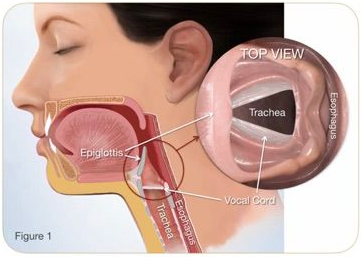
When speaking (1) the two vocal cords come together (2) the person pushes air out from the lungs through the breathing (3) the air passes in between the vocal cords and causes them to vibrate. This vibration of the vocal cords creates our voice. The shape and tightness of our vocal cords essentially gives us the quality of our voice. There are 5 muscles inside the voice box (on each side) controlling the movement of the vocal cords.
Each of these small muscle perform a different function and are controlled by nerve fibers in the recurrent laryngeal nerve (RLN).
The Anatomy of Recurrent Laryngeal Nerve
The recurrent laryngeal nerve is a branch of a much larger nerve called the Vagus Nerve. Vagus leaves the brain, exits the skull goes down the neck and into the chest; this is when it gives off the RLN branch. The RLN the does a U-turn and comes back up to the neck goes under the inferior parathyroid gland & over the superior parathyroid gland before entering the voice box.

This consistent relationship between the recurrent laryngeal nerve and the parathyroid glands is demonstrated in the figure above & the two figures below. It is a very important relationship because it always helps separate the areas where the surgeon would find the inferior vs. the superior parathyroid glands.
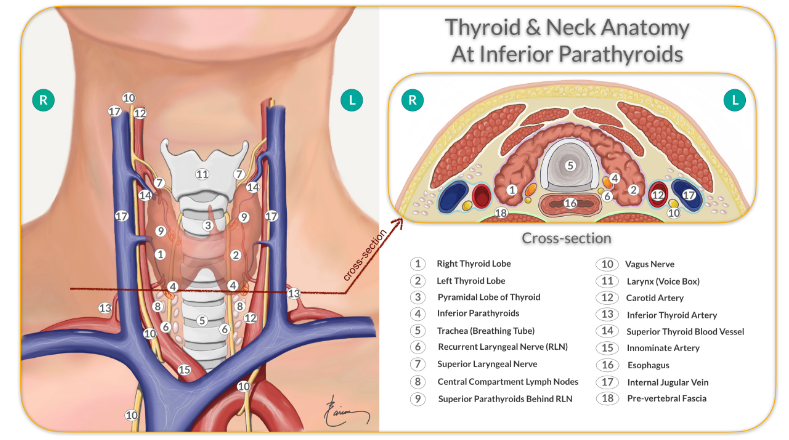
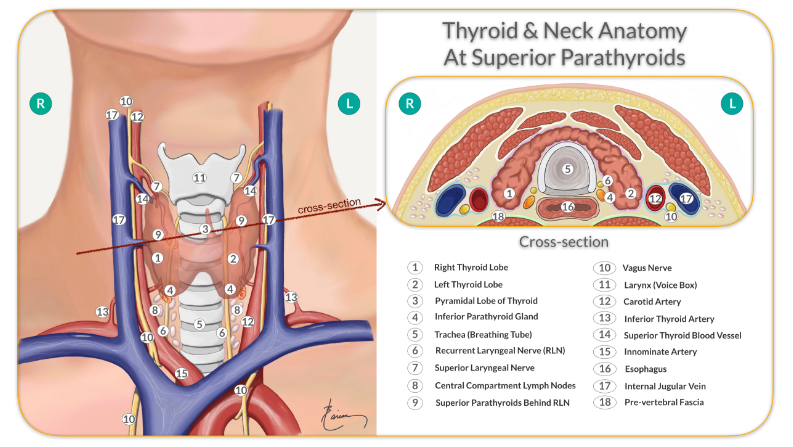
Fortunately the recurrent laryngeal nerve is relatively easy to identify by expert surgeons. The nerve has glistening white texture and the direction it aims towards is always the lower part of the voice box. The RLN always starts in the neck deep to the level of the carotid artery then gets closer to the breathing tube before it enters the voice box. All these anatomical relationships help the expert surgeon easily find the nerve.
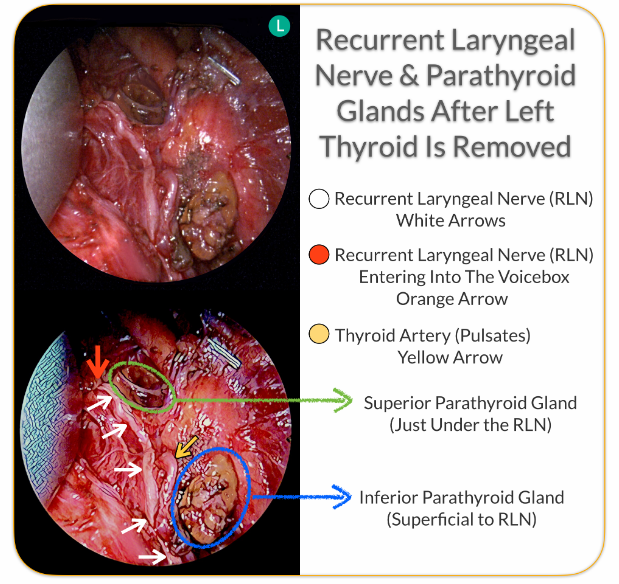
As can be seen in the image above the RLN is very visible, and can be easily identified along its course (white arrows). This is the reason that in patient who have not had previous neck surgery, using a breathing tube or nerve monitoring is not essential.
RLN Nerve Monitoring In Surgery
The nerve is not so visible in people who have had previous surgery in this area of the neck (previous thyroid, parathyroid or spine surgery). In these circumstances, we at the CENTER always use nerve monitoring devices, and at times nerve stimulators to safely find and protect the nerve. The nerve monitoring sensor is attached to the surface of the breathing tube, and gives us an added measure of safety for identification and preservation of the RLN that may be hidden by scar tissue.
The nerve monitoring sensors (shown as a blue strip on the illustration) sits next to & touches the vocal cords; it measures any activity in the vocal cord which would indicate the nerve being stimulated, irritated or pressed. This allows the surgeon to know that they are working in close proximity of the RLN. When scarring is present and the nerve cannot be clearly seen, a nerve stimulator can be used that sends a very low electrical signal into the scar tissue. If the RLN is within the scar tissue then the electrical signal would stimulate the nerve and therefore cause activity in the vocal cord. The nerve monitor then would alert the surgeon that there is activity in the nerve and to be cautious. This is how the surgeon would know they are close to the RLN and to take extra precaution to free the nerve from scar tissue, or if possible (when the parathyroid adenoma is not close to the area of RLN) avoid that area. This added measure of safety allows expert parathyroid surgeons to more safely operate on people who have had previous neck surgery.
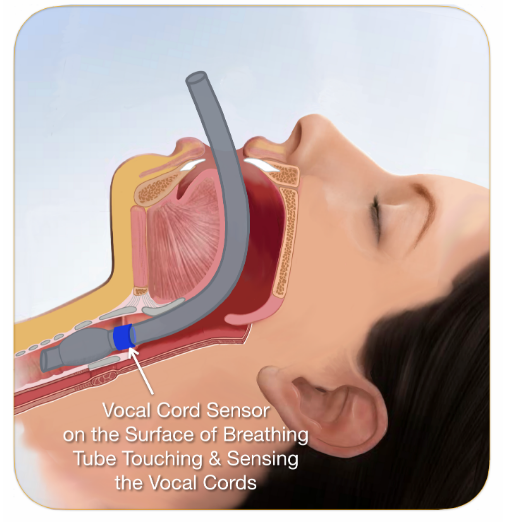
Sometimes we use the nerve monitoring breathing tube for professional voice user, singers etc. EVERY PERSON IS UNIQUE AND EVERY SURGERY HAS TO CONSIDER THEIR UNIQUE CIRCUMSTANCES. Protection & preservation of the Recurrent Laryngeal Nerve is an absolute priority.